

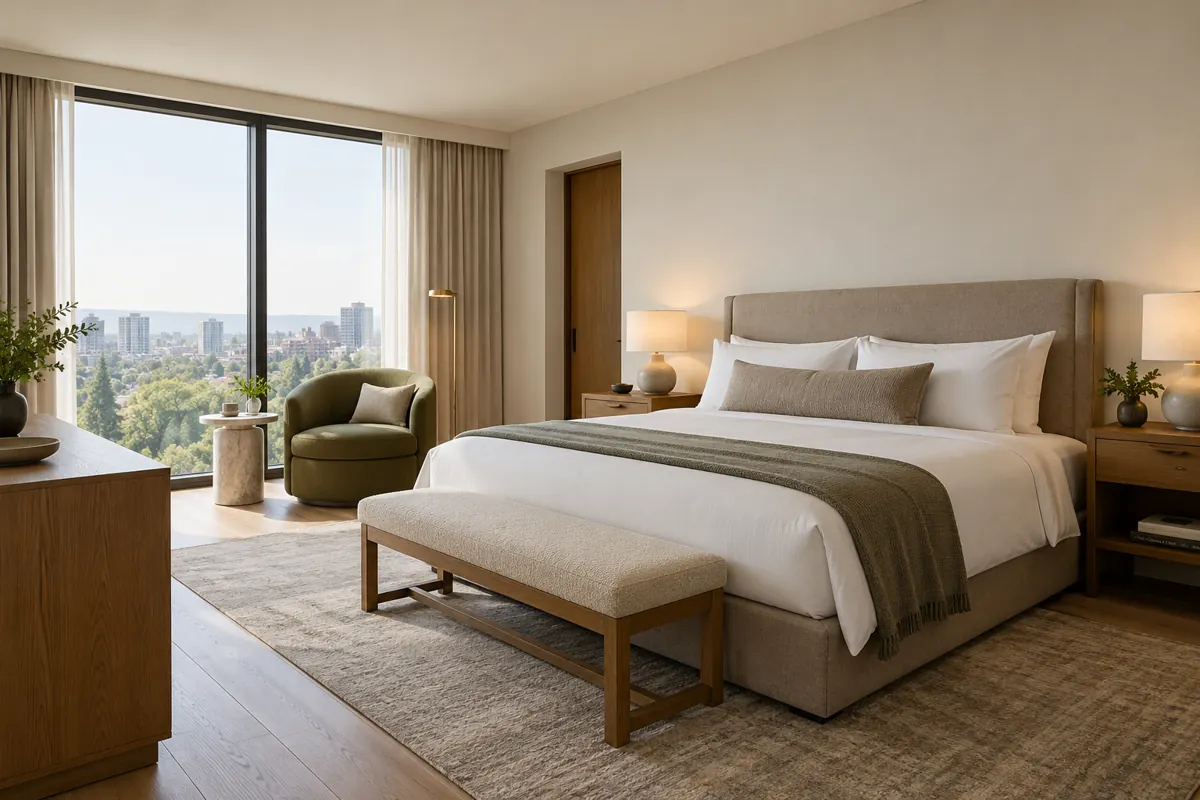
Picture a guest arriving after a long journey. The room looks lovely, but the suitcase blocks the wardrobe and the only convenient socket sits behind the bed. Beautiful hotel furniture has missed a few important jobs.
When I review furniture ideas, I ask what each piece does for the guest and the team caring for it. In 2026, warmth, flexible layouts, local character and easier maintenance offer useful starting points. Here are 25 ways I would translate those directions into a hotel project.
What Is Shaping Hotel Furniture in 2026?
Wimberly Interiors’ 2026 outlook emphasizes tactile materials and a sense of place. MityLite’s commercial furniture forecast highlights warm colors and flexible furniture. These are industry observations; the following ideas are my practical recommendations, rather than 25 independently measured trends.
Warmer Materials and Softer Shapes
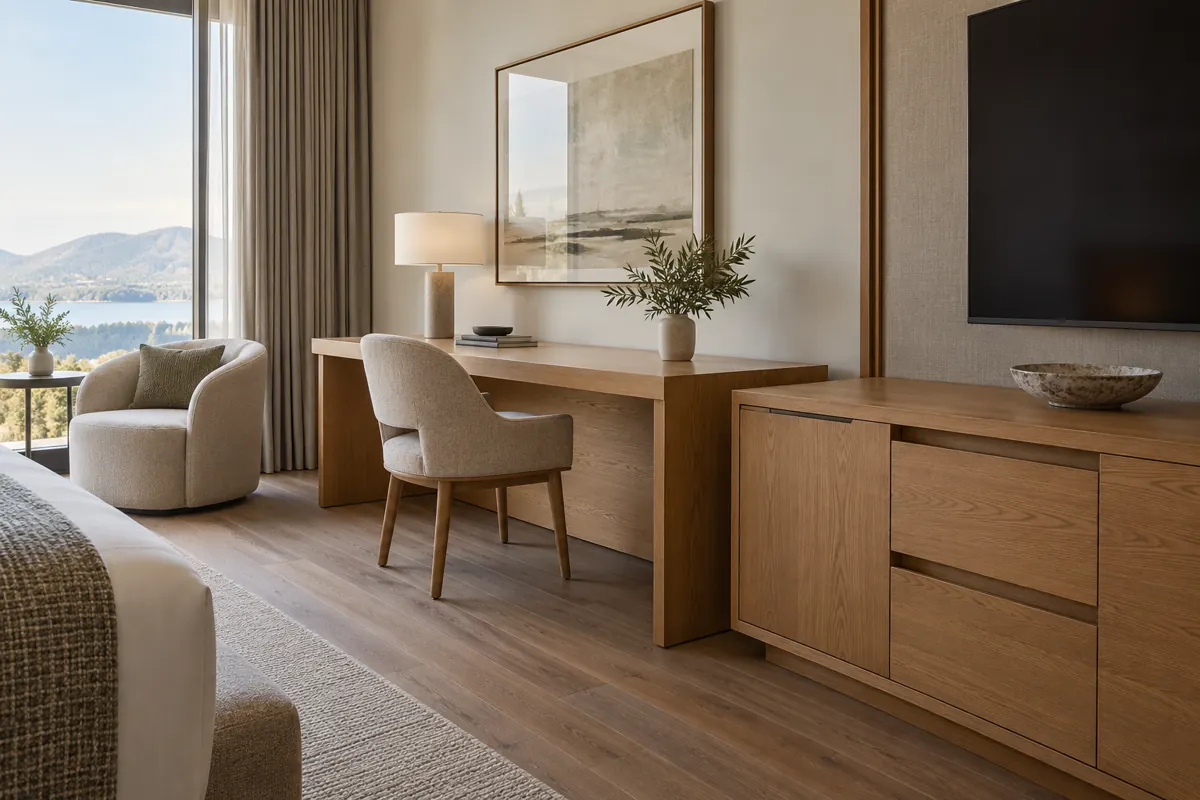
1. Warm wood casegoods
I like warm oak or walnut tones for desks, bedside tables and cabinets because they connect a room without demanding attention. Choose solid wood, veneer or laminate by performance and budget; a wood appearance alone says little about durability.
2. Curved sofas and rounded chairs
A curved sofa can make a large lounge feel more welcoming. Check its full footprint before falling in love with the photograph. Rounded furniture still needs clear circulation, sensible delivery access and upholstery that can be repaired.
3. Earth tones with a little color
Start with sand, oatmeal or soft brown, then add olive or terracotta through chairs and cushions. I prefer putting stronger colors on pieces that can be refreshed later, especially when the cabinetry needs to serve several renovation cycles.
4. Mixed-material tables and cabinets
Wood, stone and metal can add depth without filling the room with decoration. Keep the combination controlled. Ask how stone edges are protected, how joints are finished and whether the tabletop needs special cleaning products.
5. Fluted details in selected places
Reeded cabinet fronts or a fluted reception desk create texture through shadow. Use them where guests notice the detail, rather than on every surface. Deep grooves around food and drinks deserve an honest conversation with housekeeping.
Hotel Bedroom Furniture That Works Harder
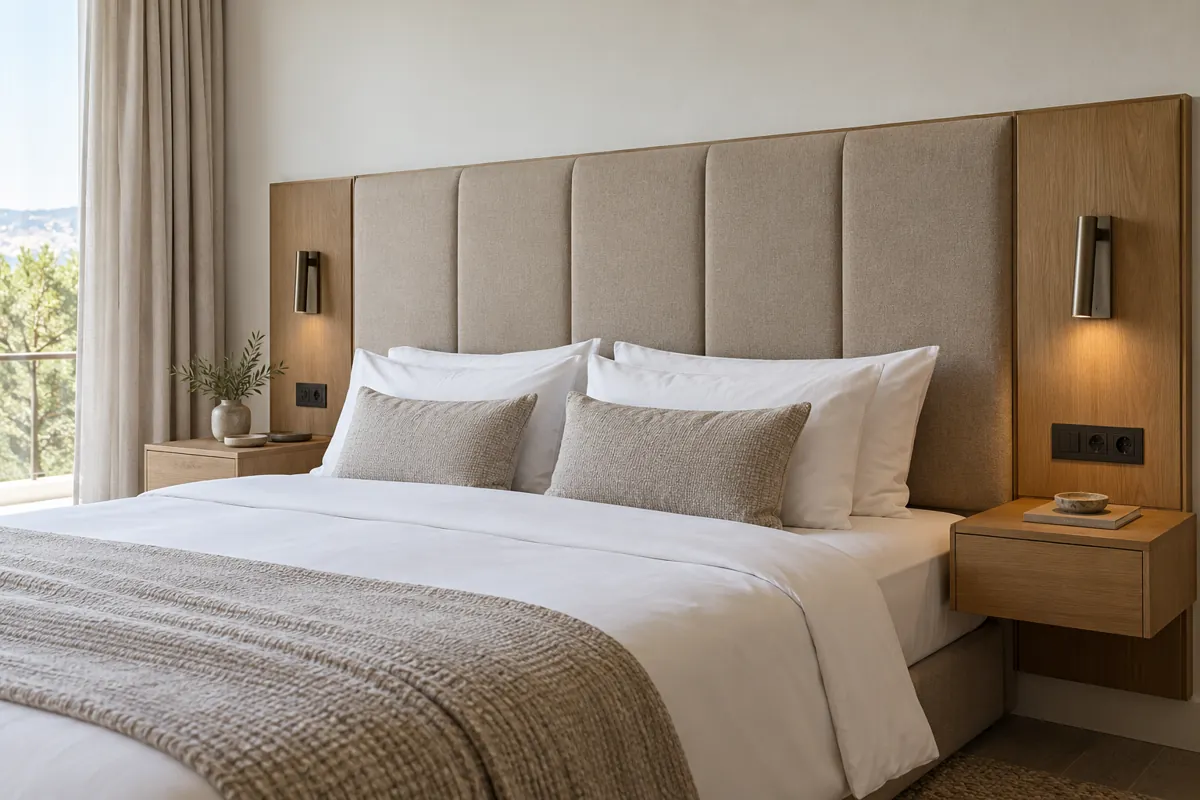
6. Integrated headboards with light and power
Plan the headboard, reading lights, switches and sockets together. Nobody wants to move a bedside table just to charge a phone. Confirm mattress height, twin-bed options and maintenance access before approving the drawings.
7. Floating nightstands
Wall-mounted bedside units can make a compact room feel lighter and leave the floor easier to reach. They still need proper fixing and enough space for a phone, glasses and water. A tiny decorative shelf may disappoint guests.
8. Open-and-closed wardrobes
Open hanging space helps short-stay guests see their belongings; closed storage keeps longer stays tidier. I would choose the balance around the guest profile. Check hanger clearance, shelf reach and door movement against the actual room plan.
9. Luggage benches with useful storage
Give the suitcase a home before it takes over the chair. A bench with a lower shelf can combine several jobs. Test it with an open suitcase, and check that neither the case nor the guest blocks the wardrobe.
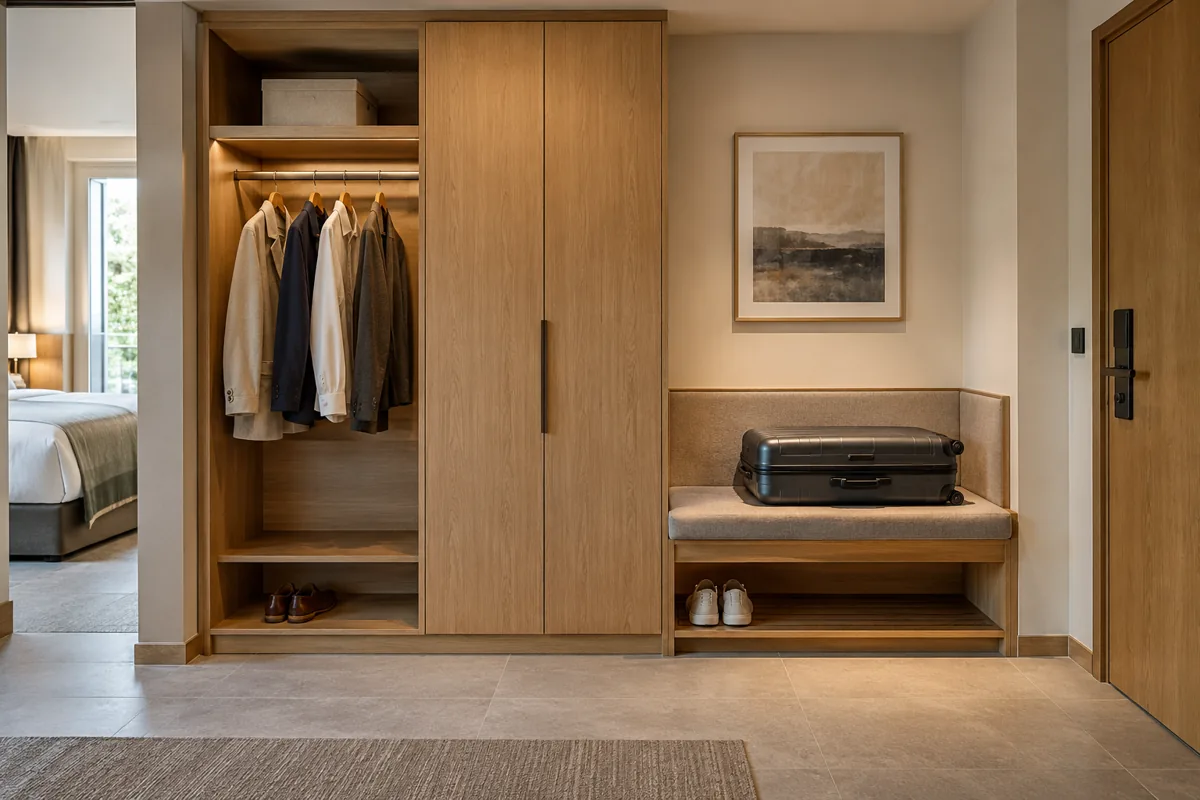
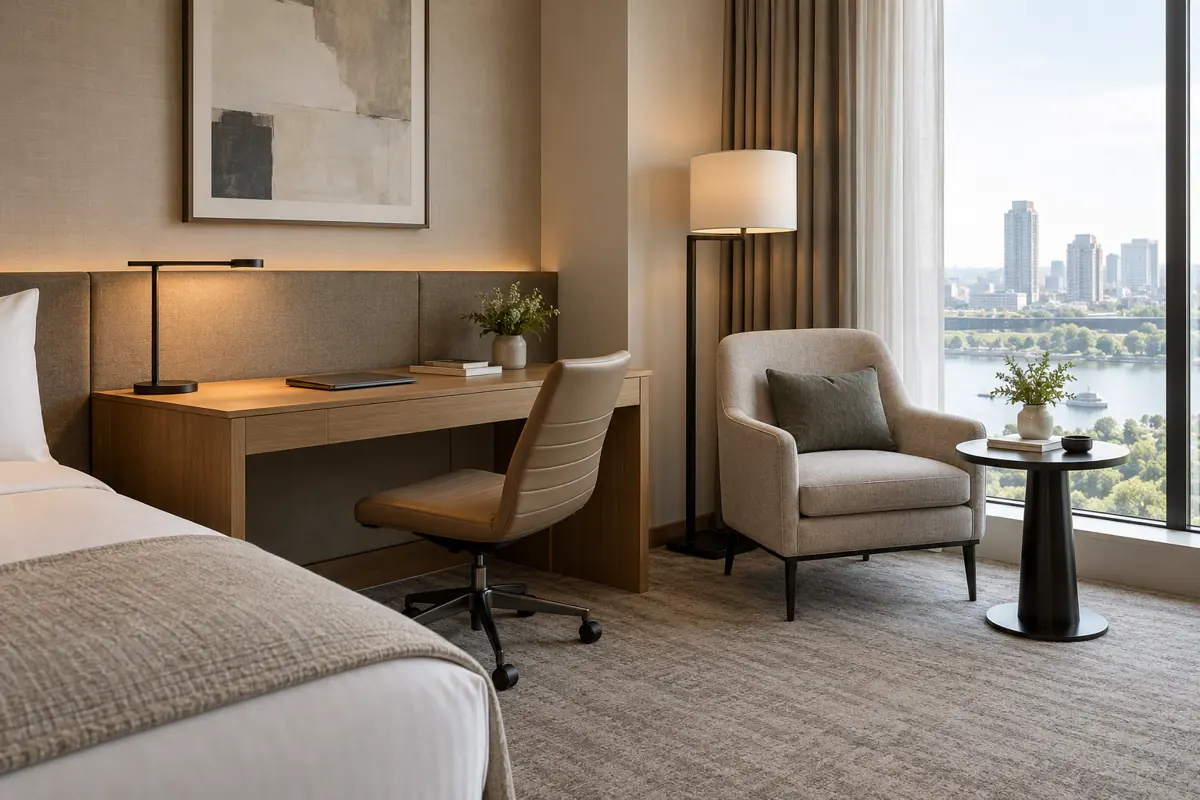
10. Desks for work and a quick meal
A slim desk earns its space when the chair fits, knees clear the underside and power is nearby. Test it with a laptop and a tray. Shallow decorative consoles often look convincing until someone tries to use them.
11. Reading chairs with movable side tables
One comfortable chair and a light side table can create a proper place to unwind. I would remove an unnecessary extra piece before squeezing this corner beside the bed. Guests should be able to reach it without shuffling furniture.
12. Equipment-led minibar cabinets
Choose the minibar fridge and coffee equipment before finalizing the cabinet. Follow each appliance’s ventilation and clearance instructions. Include access for cleaning and replacement, and check where a kettle’s steam will go rather than hiding everything behind a beautiful door.
Flexible Hotel Lobby and Dining Furniture
13. Modular lobby sofas
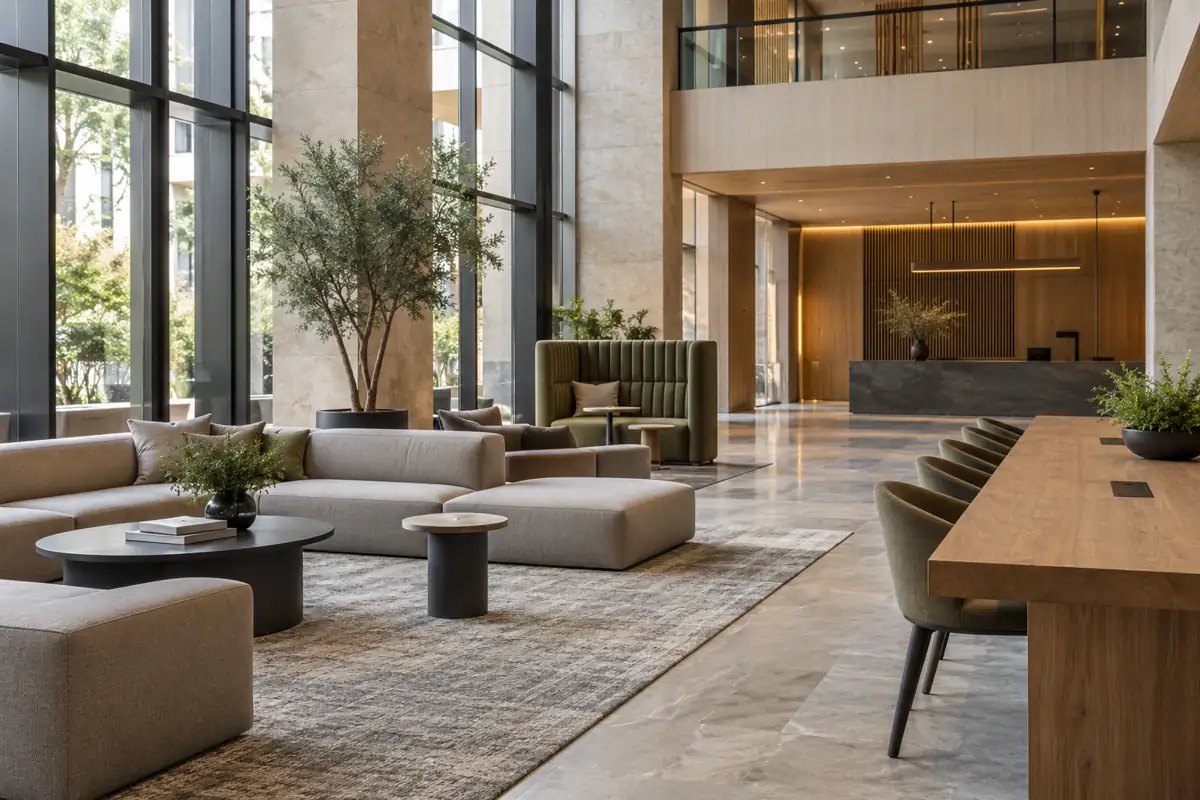
Modular seating lets a lobby support couples, families and small groups. Specify connectors and stable configurations so the pieces stay together during use. Before ordering, ask staff to test how easily the units move and reconnect.
14. Communal tables with discreet power
A shared table can handle emails in the morning and conversation later. Keep charging access convenient, cables contained and electrical components serviceable. Table height, chair comfort and bag storage determine whether guests actually choose to sit there.
15. High-back seating for quieter corners
High-back chairs or booths offer visual enclosure within an open lobby. They are useful for guests seeking a little personal space, but I would not promise sound privacy without acoustic evidence. Position them away from the busiest routes.
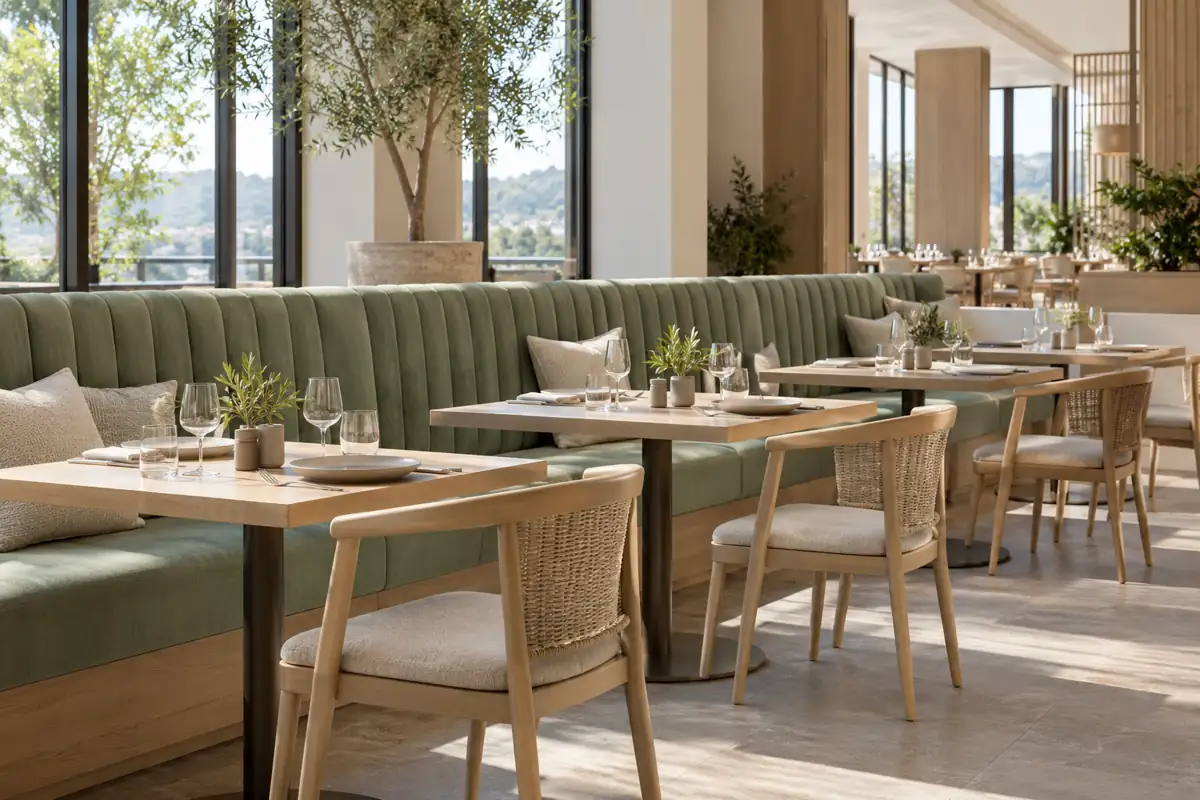
16. Banquettes that define dining areas
A banquette gives a restaurant a clear edge and a softer feel. Check how guests enter, how servers reach the tables and how upholstery is cleaned. Additional seating is only useful when the layout remains comfortable.
17. Nesting lounge tables
Nesting tables let a seating group adapt to one guest or several. Look beyond the attractive overlap: check stability, usable tabletop area and whether staff can move them without awkward lifting or scratching nearby furniture.
18. Dining chairs that staff can move
Comfort matters, and so does the weight of a chair moved dozens of times. Try the chair at its intended table. If stacking is required, confirm the permitted stack, protective details and the storage space it needs.
Map these choices against the hotel lobby layout before buying individual pieces.
Custom Hotel Furniture with Character
DLR Group’s hospitality outlook connects design with place and personal experience. My takeaway: give furniture a reason to belong to this property.
19. Headboards inspired by the destination
A local pattern or landscape can guide stitching, proportions or panel rhythm without turning the room into a theme display. I would develop one thoughtful reference, then check that its materials and details reproduce consistently across the room count.
20. Woven chair backs and cabinet fronts
Woven details add warmth and visible craft. Specify the actual material rather than simply requesting “rattan style.” Review support, cleaning and suitability for the property’s humidity, especially where guests touch or lean against the weave.
21. One signature furniture piece
A distinctive reception desk or entrance bench can carry more identity than many competing features. Keep surrounding pieces calmer and direct the detail budget toward the arrival point. Confirm fabrication and delivery access early for unusually shaped furniture.
Furniture That Can Be Maintained and Updated
22. Texture with a cleaning plan
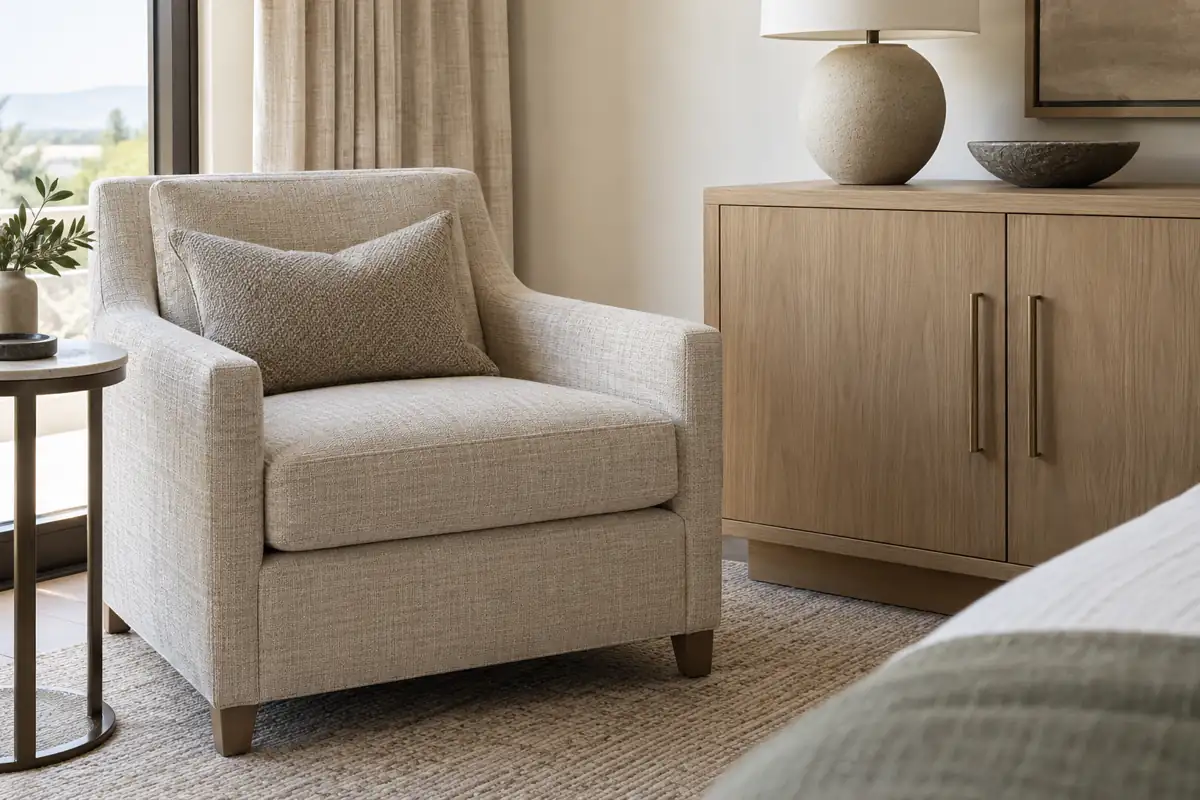
Textured upholstery should feel inviting and survive its intended use. Ask about pilling, snagging, colorfastness and cleaning compatibility alongside abrasion results. I would test the proposed fabric with the hotel’s real cleaning method before approving a large order.
23. Replaceable cushions and upholstery panels
Separate cushions and removable panels can make targeted repairs easier. Confirm how they detach, who can replace them and whether spare fabric will be available. A removable-looking cushion is not proof of a practical replacement system.
24. Replaceable high-wear components
Drawers, handles and hinges deserve attention before opening day. Request identifiable hardware and a spare-parts list, with access shown on the drawings. When a small part fails, replacing that part should be a realistic option.
25. Materials supported by evidence
Ask for documentation matching the specified products and project requirements. For wood sourcing, understand what FSC labels mean; sourcing certification does not establish emissions performance. Request separate evidence where indoor-air or other performance requirements apply.
Which Ideas Fit Your Hotel?
I would shortlist three priorities before choosing finishes. Use this table as a starting point, rather than a fixed hotel standard.
| Project | Start with | Check first |
|---|---|---|
| Business hotel | Desks, bedside power | Working comfort |
| Compact rooms | Floating units, luggage storage | Clearances and capacity |
| Boutique hotel | Local details, signature furniture | Sample consistency |
| Phased renovation | Replaceable cushions and hardware | Existing condition and compatibility |
Before You Order
Review the hotel room layout with furniture drawn to scale. Open drawers, pull out chairs and test luggage positions in a sample room. Approve physical finishes under the intended lighting. Then record dimensions, materials, hardware and spare parts in the specification; our hotel casegoods procurement guide explains this coordination.
FAQs About Hotel Furniture
What furniture is used in hotels?
Guestrooms commonly include beds, bedside tables, wardrobes, desks, chairs and luggage benches. Public areas need reception desks, lounge seating and dining furniture. The final list depends on room size, guest profile and services.
What is hotel furniture made of?
Common materials include solid wood, plywood, MDF, particleboard, veneers, laminates, metal and upholstery. Specify the core, finish, construction and intended use together. A material name alone cannot tell you whether a piece suits your hotel.
What is the difference between hotel furniture and home furniture?
Hotel furniture is specified around repeated guest use, cleaning, maintenance and project requirements. Residential furniture may not meet those needs. Ask for evidence of suitability for the intended commercial setting instead of relying on the label “hotel grade.”
What does FF&E mean in a hotel?
FF&E means furniture, fixtures and equipment. It is broader than furniture and may include lighting and other equipment. Agree the project’s exact scope in the schedule so items are neither missed nor counted twice.
How often should hotel furniture be replaced?
There is no single replacement interval for every item. Inspect condition, safety, comfort and repair options alongside brand requirements. Sound pieces may need only new upholstery or hardware; damaged structural components require a different decision.