

Imagine settling into a beautiful hotel room, opening a book, and discovering that the nearest lamp lights everything except the page. Or sitting down to dinner and reaching for your phone just to read the menu. Small frustrations like these explain why I start hotel lighting design with everyday activities.
Good hotel lighting combines a comfortable background with focused light where people need it. Guestrooms need flexible reading and resting options; lobbies need clear arrival routes; restaurants need attractive light on food and faces. The fixtures should work with the furniture, finishes and controls as one complete plan.
Table of contents
- Start with the activity, then choose the light
- Guestroom lighting: make a small space work harder
- Lobby lighting: welcome people and show them where to go
- Restaurant lighting: plan for breakfast and dinner
- Check specifications before comparing prices
- Test the whole room before bulk purchasing
- Frequently asked questions
- Plan your hotel lighting with the whole space in mind
Start with the activity, then choose the light
I find it easier to plan lighting in four layers. Ambient light provides the background. Task light helps someone read, work or shave. Accent light highlights a surface or feature. Decorative fixtures bring character, but they still need a useful role.
Not every layer needs a separate fixture. A shaded table lamp may add both useful light and atmosphere. The important question is whether the combination supports the room throughout the day.
The Illuminating Engineering Society discusses this balance in its hospitality lighting guidance, including glare, controls and the dining experience. I use those principles as a starting point, then adapt the scheme to the layout and operator’s requirements.
Guestroom lighting: make a small space work harder
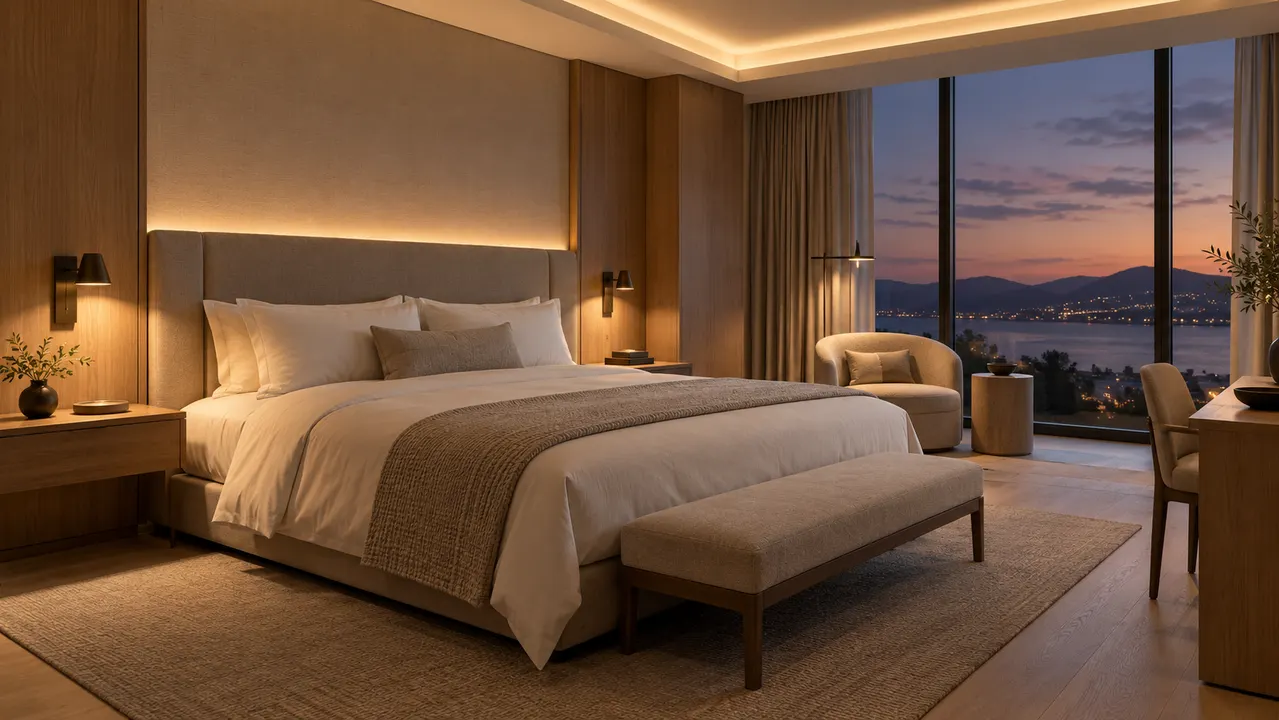
A guestroom is a bedroom, workplace and dressing room rolled into one. Giving every activity the same overhead light rarely feels comfortable. ERCO’s hotel room lighting examples show how background, focused and decorative light can work together.
Separate reading light from the room glow
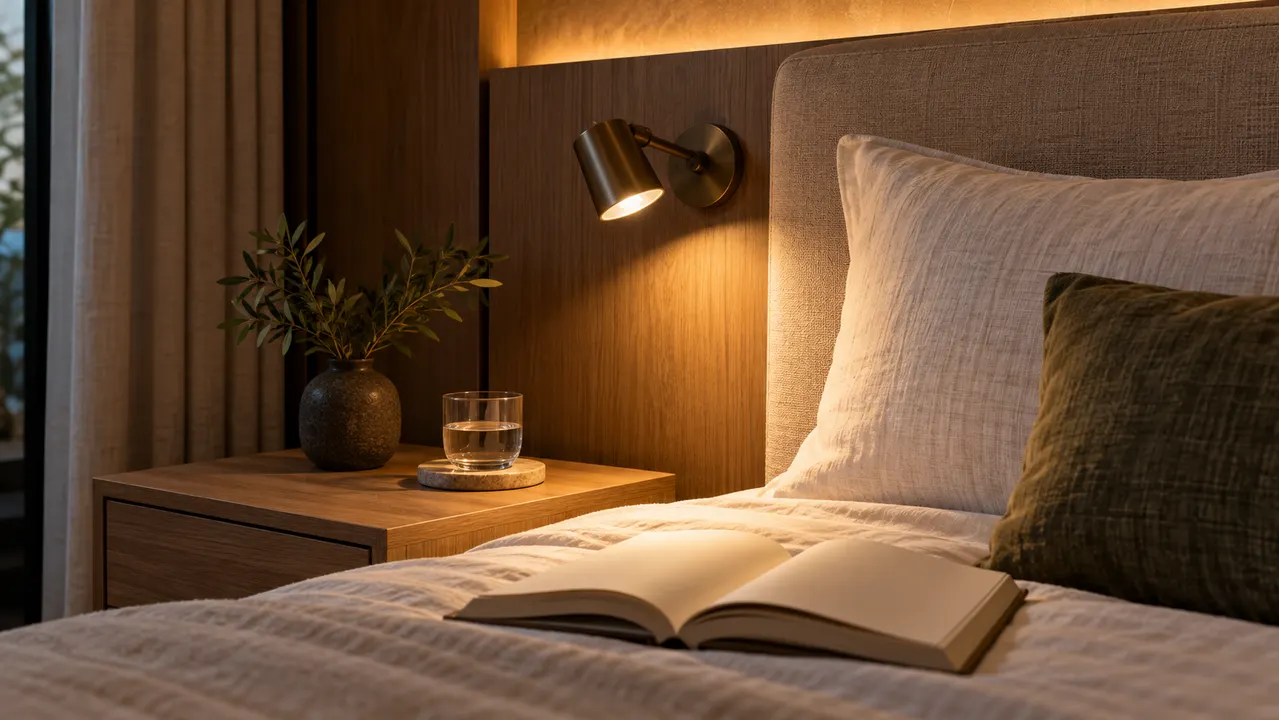
Soft headboard lighting or a concealed ceiling wash can create a calm background. Add a shielded reading light on each side of a double bed, with independent controls. Aim the beam at the book rather than across the neighboring pillow.
Check the fitting while lying down. A light that looks discreet from the doorway may expose a bright source from the bed. Also check whether someone can adjust it without stretching behind a pillow.
Give desks, wardrobes and mirrors useful light
Place desk lighting where a laptop screen will not catch a harsh reflection. Check shadows on the work surface. Inside a wardrobe, position lighting so hanging clothes do not block it.
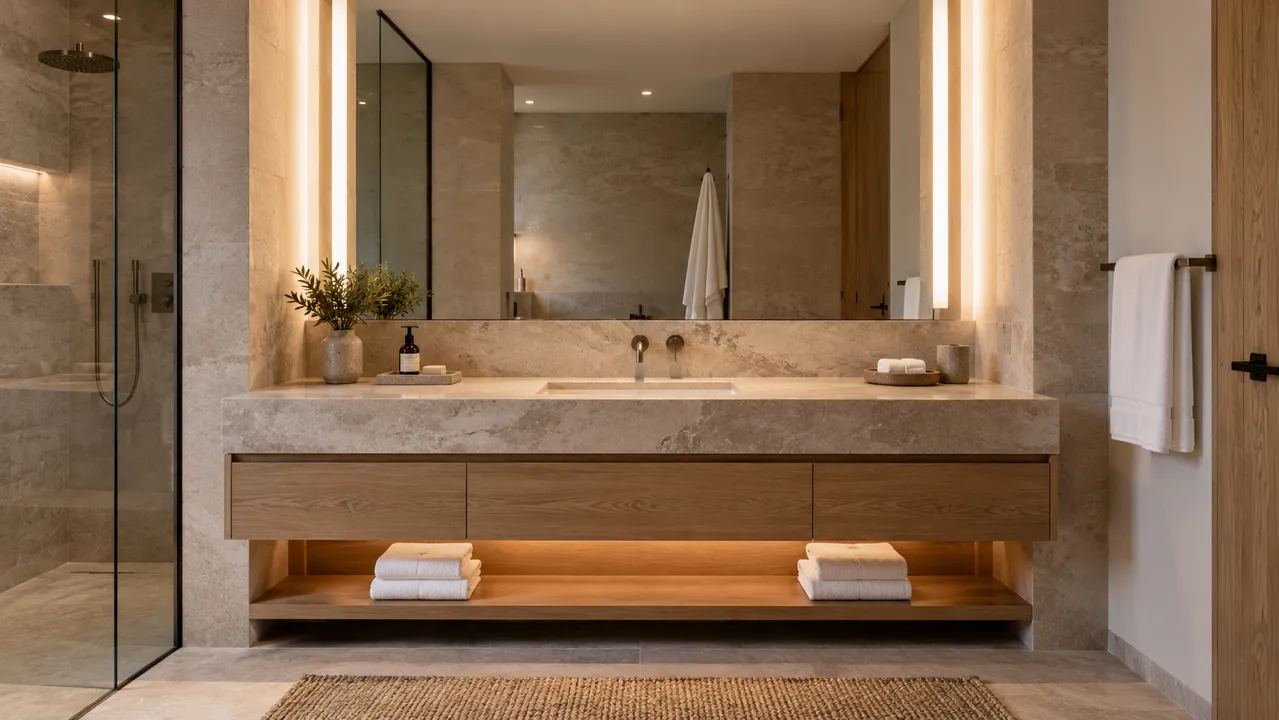
At the bathroom mirror, diffused light beside the face can reduce the deep shadows created by a single overhead spot. Coordinate the fittings with mirror dimensions, cabinetry and wet-zone requirements. A brighter ceiling alone will not solve poor mirror lighting.
Keep nighttime controls simple
Guests should understand the controls without a lesson. Group switches logically, make the main room lights controllable from the bed, and preserve independent reading lights. A discreet low-level route toward the bathroom can help guests move without switching on the entire room.
I would also test the entrance switch after housekeeping resets the room. The arrival scene should make the space easy to understand immediately.
Lobby lighting: welcome people and show them where to go
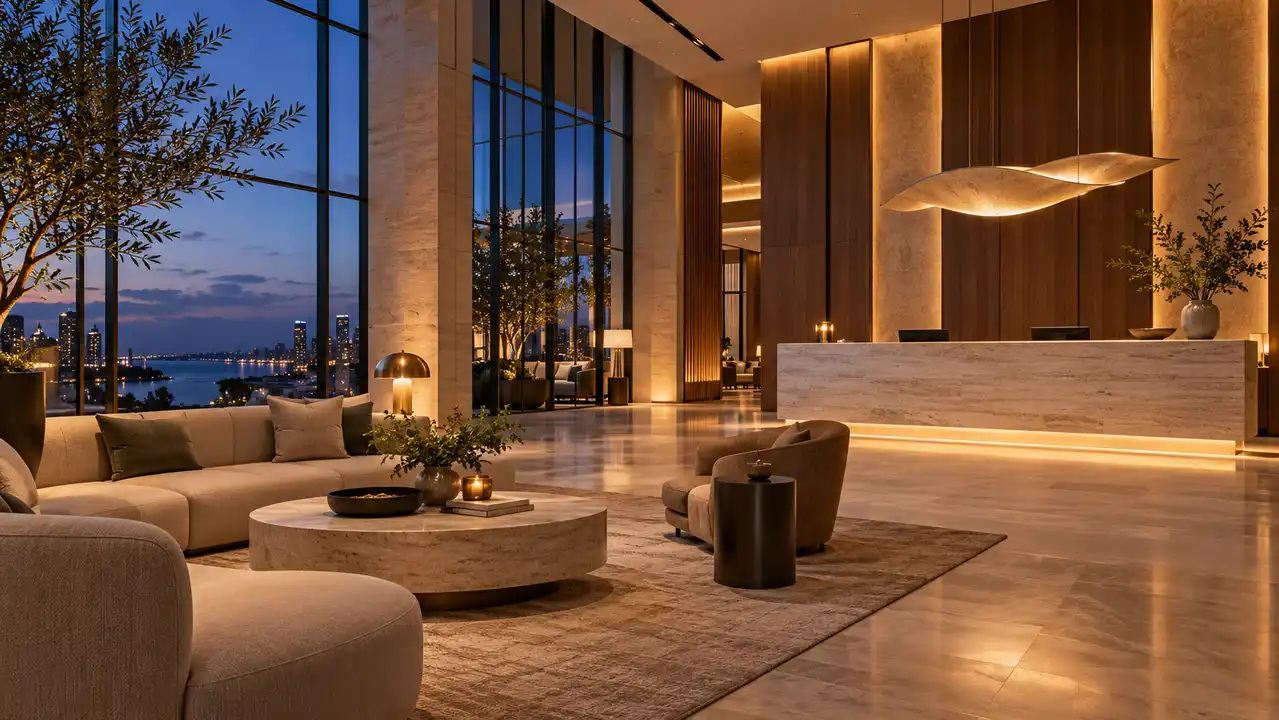
A lobby has several jobs: check-in, waiting, conversation and circulation. I give each area a clear purpose instead of spreading identical light across the whole floor. ERCO’s lobby lighting guidance explains how illuminated walls and selected focal points help organize these zones.
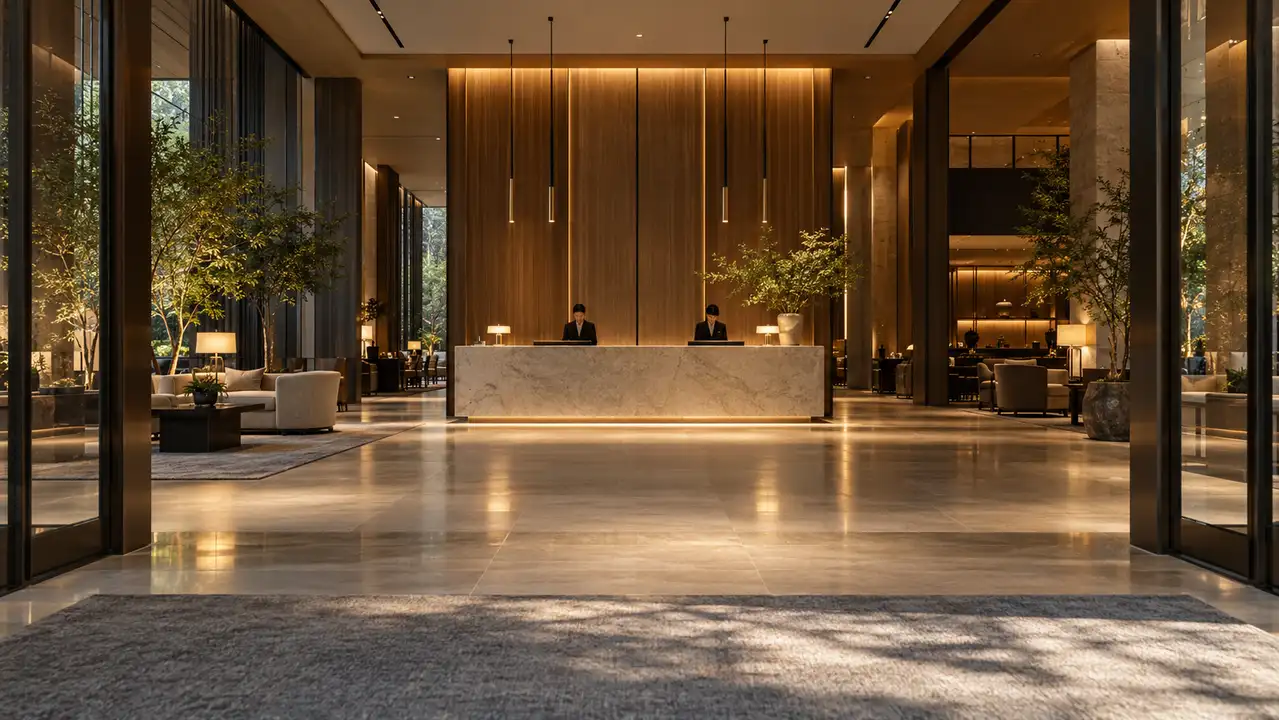
Help guests find reception naturally
Make reception visually distinct through a softly lit backdrop and useful desk lighting. Check that staff can see documents and that guests can see faces comfortably. Review reflections on screens and polished counters from both sides of the desk.
A large chandelier can anchor a tall space, but it may contribute little useful light at counter height. Check its distribution and installation height before treating it as the main solution.
Bring light down to the seating level
Table lamps, floor lamps and gentle wall lighting can make a lounge feel comfortable at a human scale. Position them around the actual seating arrangement. Keep exposed bright sources away from seated sightlines, and maintain clear light along the paths between furniture.
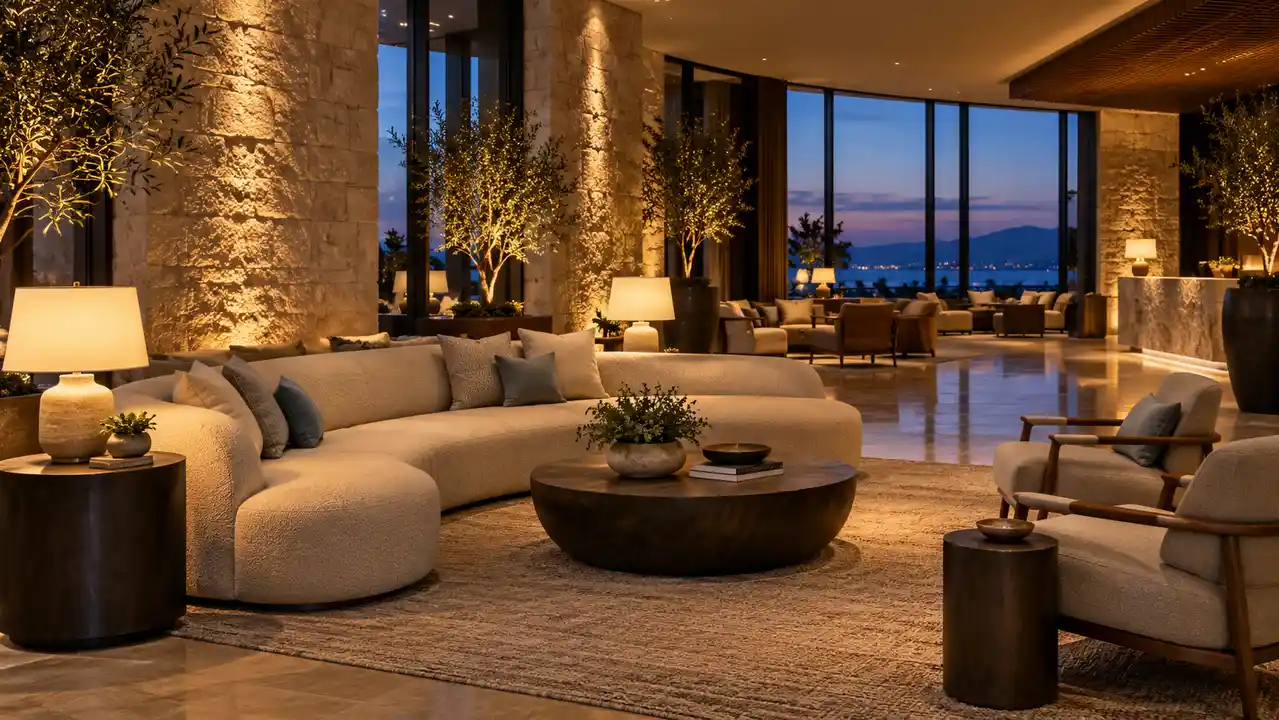
Wall lighting also changes how materials read. Textured stone may respond well to carefully aimed light, while glossy finishes can create distracting reflections. I review these choices alongside furniture and finishes during project design, rather than waiting until the ceiling plan is finished.
Restaurant lighting: plan for breakfast and dinner
An all-day hotel restaurant needs more than one mood. Breakfast may benefit from daylight and a clear view of the buffet; dinner needs a comfortable setting without making menus difficult to read. ERCO’s restaurant lighting examples consider food, people and the surrounding room together.
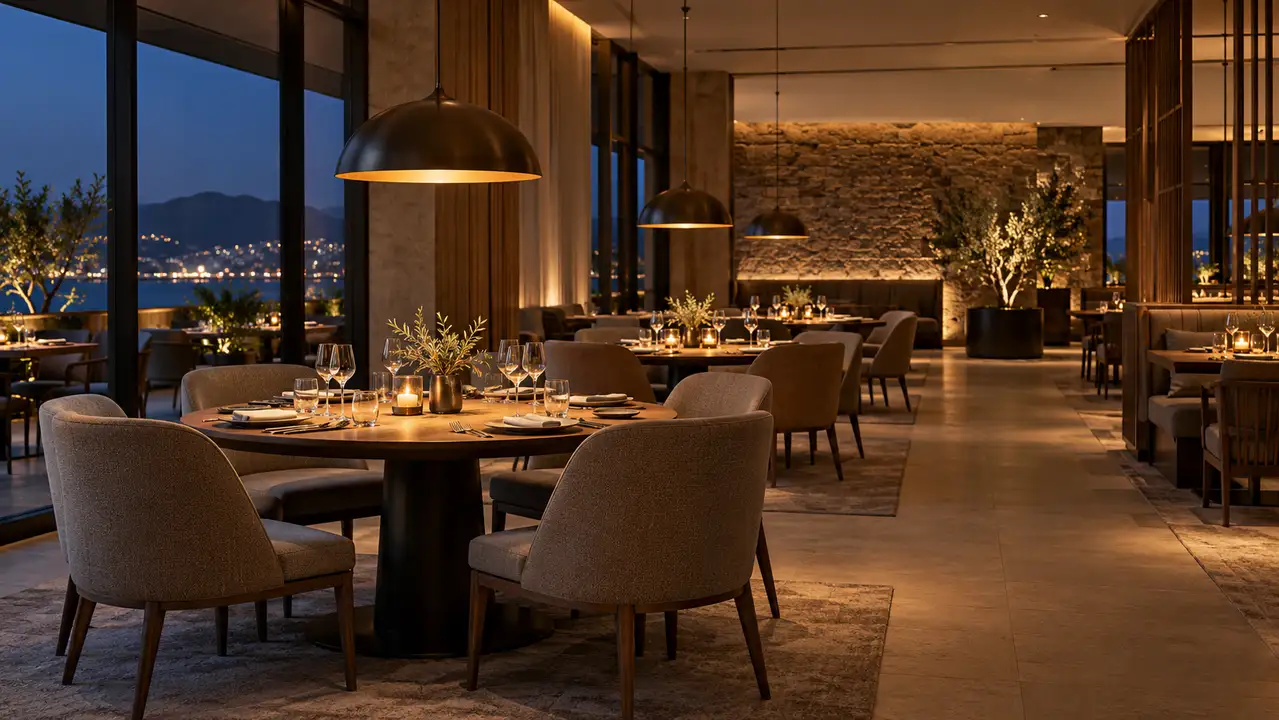
Light tables without leaving faces in shadow
Use shielded pendants or carefully aimed fittings to give tables a clear focus. Add softer surrounding light so faces remain visible. Test the effect with actual plates, glassware and menus, including smaller print. Some guests need more light than others.
Coordinate pendant positions with the furniture plan, not just the ceiling grid. If tables move for groups or events, consider adjustable fittings or a distribution that accommodates those arrangements. Check hanging heights from seated and standing positions.
Create scenes that staff can actually use
Separate controls for dining tables, buffet counters, decorative features and circulation give staff useful flexibility. Set up understandable breakfast, dinner and cleaning scenes, then test them after dark. Cleaning needs enough visibility to spot spills and marks.
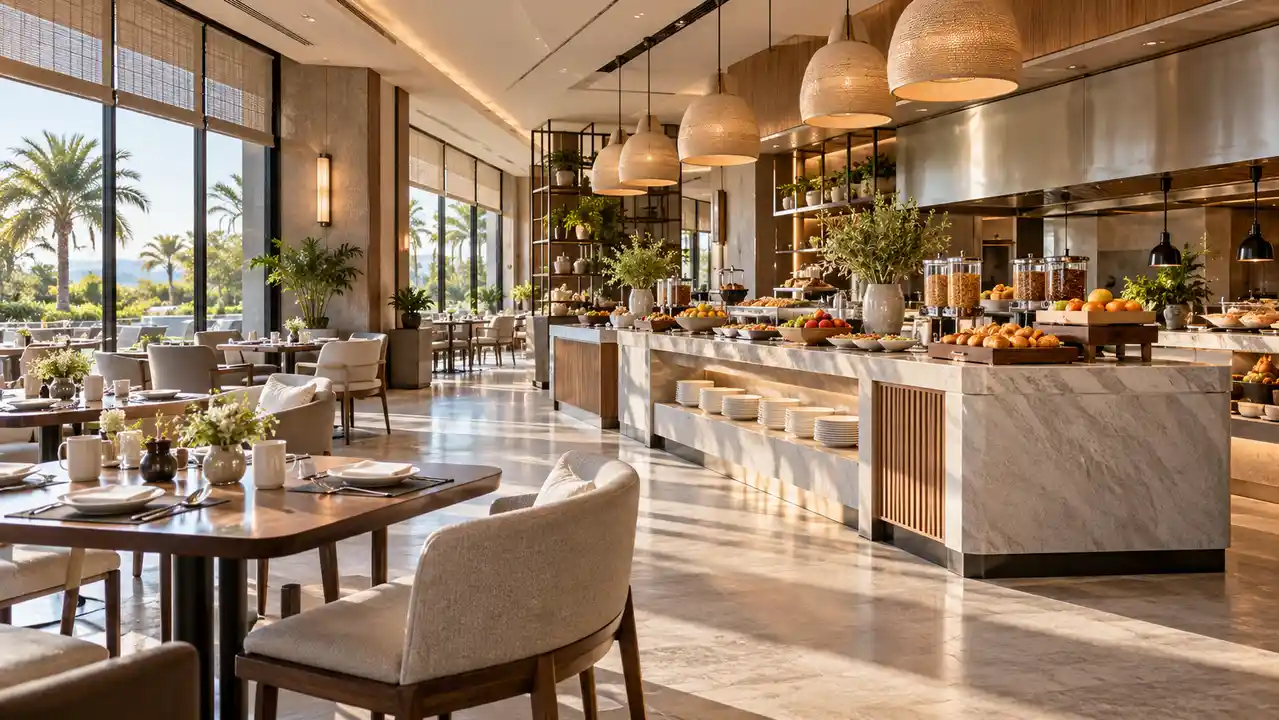
Daylight can reduce the need for electric light, but the window side and the back of the room may need different settings. Keep the transition from the lobby comfortable rather than making guests step into sudden darkness.
Check specifications before comparing prices
A lower fixture price means little if the fitting flickers when dimmed or cannot be serviced. I ask suppliers to confirm the following before an order:
- Color temperature: compare the warmth of adjacent sources and inspect samples with the selected finishes.
- Color rendering: check how naturally light shows skin, food, fabrics and stone; color temperature alone does not tell you this.
- Output and beam distribution: confirm light reaches the intended surface at the actual mounting height.
- Dimming compatibility: test the proposed fixture, driver and controller together, including low settings.
- Maintenance: confirm access to drivers, replacement parts, warranties and consistent replacement specifications.
Warm white around 2700–3000K is a common starting point for relaxed guest-facing spaces, not a rule for every hotel. Brightness targets depend on the activity, measurement position and project requirements. Have the lighting and electrical professionals confirm calculations, emergency lighting and applicable local requirements.
Test the whole room before bulk purchasing
A drawing cannot tell you whether a reading lamp shines into your eyes. In a full-size mock-up room, sit at the desk, lie on the bed, open the wardrobe and use the mirror. Test the evening scene as well as the brightest setting.
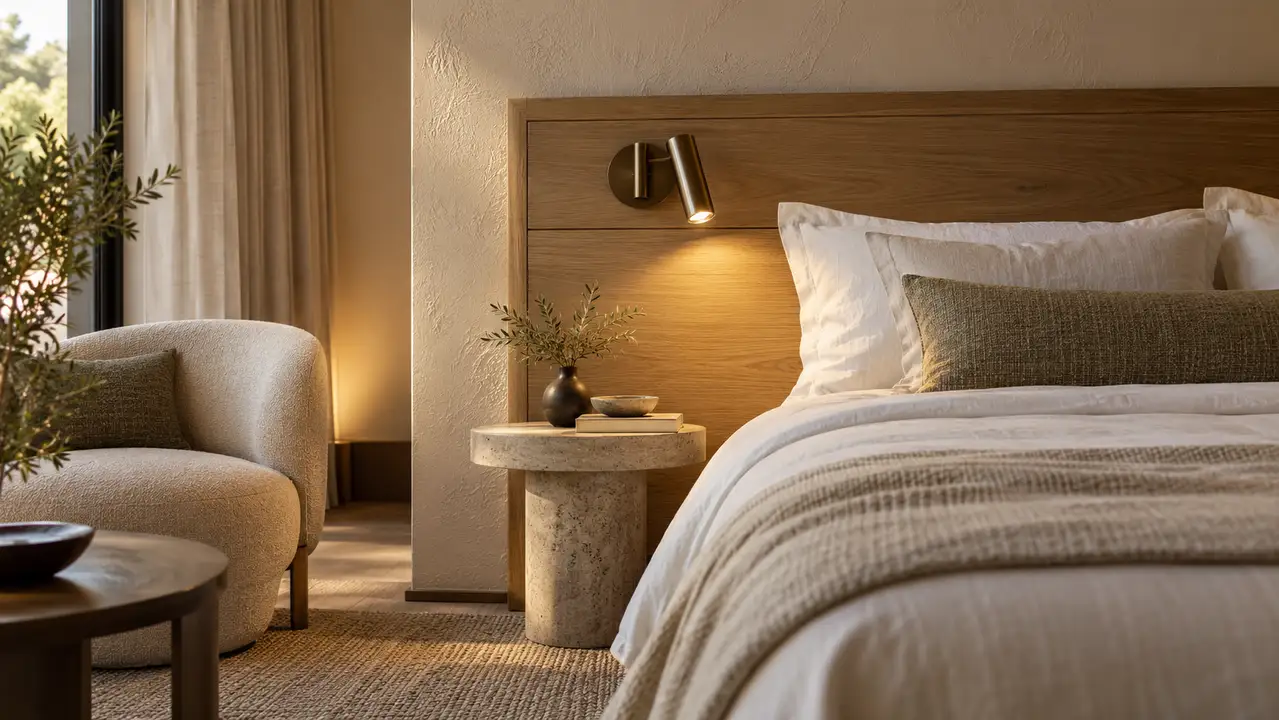
Place the approved stone, timber, tile and fabric samples under the proposed lighting. Photographing them helps record decisions, but check them in person too. Cameras can change how color and brightness appear.
At OKBuild Center, complete room displays help connect lighting choices with furniture, bathrooms and finishes. For a project-specific package, I would record the approved sample, fixture finish, light specification and control requirements together before manufacturing and procurement move forward.
Frequently asked questions
Hotels usually combine ambient, task, accent and decorative lighting. The mix varies by space: reading lights serve guestrooms, reception needs useful work lighting, and restaurants need coordinated light on tables and people.
Warm white around 2700–3000K is a useful starting point for a relaxing guestroom. Review the actual lamps with the room finishes, and provide separate task lighting where guests read or work.
Make reception easy to identify, use wall lighting to define the space, and add comfortable light around seating. Check circulation routes and avoid relying on a decorative chandelier alone.
A useful restaurant scheme combines focused table lighting, softer light on faces and enough background light for movement. Dimmable zones help the same space support breakfast, dinner and cleaning.
Use efficient LED fixtures, appropriate dimming, daylight-responsive settings and occupancy controls where suitable. Keep necessary safety lighting available, and test controls so energy savings do not compromise guest comfort.
Plan your hotel lighting with the whole space in mind
Share your floor plans, room types, finish references and target budget with OKBuild. I can help connect the lighting discussion with interior design, material selection and mock-up planning, so your team can review a coordinated hotel package.