

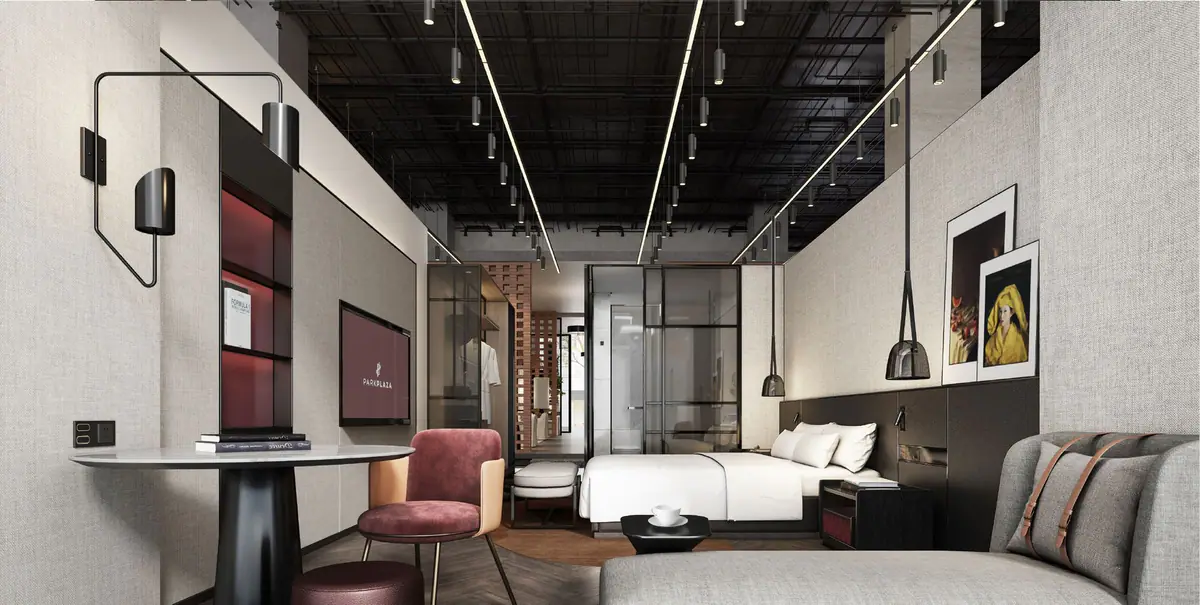
Buying materials for a hotel is not the same as buying individual products for a house. A hotel procurement team may need hundreds of repeated guestroom items, several public-area finishes, custom dimensions, destination-specific performance documents and deliveries sequenced around construction. The sourcing decision therefore has to connect design, commercial comparison, manufacturing and logistics from the beginning.
This guide is for hotel owners, developers, contractors, designers and procurement teams considering China for furniture, joinery, doors, sanitary ware, tiles, flooring, stone, lighting or soft furnishing. It explains how to prepare a workable inquiry, compare suppliers on the same basis and protect the approved room standard through production and delivery.
Quick answer: To source hotel building materials from China, begin with a room schedule, drawings and a category-level BOQ. Define the destination standards and approval route before asking for prices. Compare quotations using the same materials, dimensions, hardware, finishes and trade terms. Approve samples or a mockup room, freeze the specification, inspect production against that approval and label each package by room, floor or delivery phase. A reliable process is more important than the lowest initial unit price.
What hotel building materials should be planned together?
The practical scope depends on the hotel design and construction stage. Some buyers start with one priority category, while others need a coordinated room package. The important point is to identify which products share dimensions, visible finishes, installation interfaces or delivery dates.
| Hotel area | Typical product scope | Key coordination issue |
|---|---|---|
| Guestrooms and suites | Fixed furniture, loose furniture, wardrobes, vanities, doors, lighting, flooring and soft furnishing | Room-type repetition, finish consistency and installation clearances |
| Bathrooms | Sanitary ware, faucets, shower systems, mirrors, stone, tiles and bathroom accessories | Plumbing interfaces, waterproof-area finishes and replacement parts |
| Lobby and public areas | Furniture, decorative lighting, stone, wall panels, tiles and metal finishes | Visible finish matching, durability and public-area approval |
| Corridors and back of house | Doors, flooring, lighting, signage and durable surface materials | Fire, acoustic, slip-resistance and maintenance requirements |
OKBuild groups these categories within its commercial building material product system. Buyers can review a full package or follow a narrower route through hotel furniture, custom cabinets and joinery, doors and windows, sanitary ware, tiles, project lighting and other category pages.
When does sourcing hotel materials from China make sense?
China sourcing is usually most useful when a project has repeatable quantities, several coordinated categories, custom work based on drawings or a need to compare material levels within a defined budget. Hotels with repeated guestrooms can benefit from one approved standard being carried across many units. A multi-category project may also benefit from consolidated inspection, labeling and shipping records.
It may be a poor fit when the quantity is very small, the site needs immediate replacement stock, local certification cannot be verified before ordering or site dimensions are still changing. In those situations, local supply or a later procurement phase may create less risk. The correct decision should be based on landed cost, approval effort, lead-time tolerance and the consequence of a defect, not only the factory quotation.
Before requesting prices, ask four questions:
- Are the room types and quantities stable enough to quote?
- Which categories require custom drawings or finish matching?
- Which destination standards, test reports or brand requirements apply?
- Can the project approve samples and allow time for production, inspection and shipping?
A 10-step process for sourcing hotel building materials from China
1. Build a room-and-area scope before a product list
Start with the building, not the supplier catalog. Create a matrix showing each room type, the number of rooms, the public areas and the product categories needed in each space. A king room, twin room and suite may use similar products but different dimensions or quantities. Recording those differences early prevents a supplier from pricing one generic room and multiplying it across the whole hotel.
The scope should also show which items are supplied by the China package and which remain with local contractors. That boundary matters around electrical accessories, plumbing connections, installation consumables and products affected by local code.
2. Prepare a BOQ that suppliers can actually price
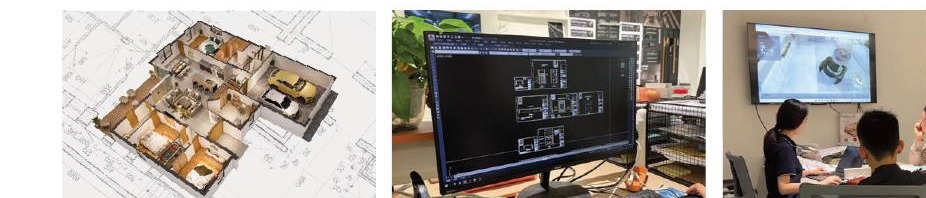
A useful hotel BOQ identifies the item, area, room type, quantity, dimensions, material, finish reference, hardware, performance requirement and drawing reference. “Wardrobe, 100 pieces” is not enough. A supplier needs to know the construction, board grade, veneer or laminate, edge details, internal layout, hardware level, finish code and installation condition.
If the design is incomplete, issue a clearly marked preliminary BOQ and identify assumptions. Suppliers can then propose alternatives without presenting assumptions as confirmed specifications. OKBuild can review early drawings through its building material sourcing process, but pricing becomes more reliable as the scope becomes more specific.
3. Confirm destination standards and approval responsibilities
The required evidence changes by destination, product and hotel standard. Doors may involve fire, acoustic or hardware requirements. Tiles and flooring may require slip, wear or reaction-to-fire data. Lighting can involve electrical safety and photometric requirements. Sanitary products need connection compatibility and applicable water-performance information.
Do not ask a supplier for “international certification” as a general phrase. Name the exact standard, test method, rating, issuing body and acceptance requirement. The ISO building and construction overview explains why agreed standards and test methods matter across building products. Final compliance should be checked by the project consultant, local authority, importer or qualified testing specialist for the destination market.
4. Shortlist suppliers by capability, not catalog size
A large catalog does not prove that a factory can deliver a hotel package. Evaluate suppliers against the real scope. For custom furniture and joinery, review drawing capability, material control, sample work, hardware options, production capacity and inspection records. For standardized products, confirm model continuity, technical data, replacement support and export packaging.
Ask who will own each task: drawing review, sample preparation, factory communication, change control, inspection, consolidation and export documents. When several factories are involved, one project record should control the approved specifications. Otherwise, each supplier may work from a different revision.
5. Normalize quotations before comparing prices
Two hotel material quotations are rarely comparable on first issue. One may include premium hardware, another basic hardware. One may price export packing, another only domestic packing. One may include tax, inland transport or shop drawings, while another excludes them. Build a comparison sheet that aligns the technical and commercial basis.
| Comparison field | What to normalize | Why it matters |
|---|---|---|
| Specification | Dimensions, substrate, surface, hardware, rating and accessories | Prevents a cheaper substitute from appearing equal |
| Quantity basis | Room count, waste allowance, spares and packaging units | Reveals missing or duplicated quantities |
| Scope boundary | Shop drawings, samples, installation items and local work | Shows what the buyer must purchase elsewhere |
| Trade terms | Named place, freight, insurance, export and import responsibilities | Moves the comparison from unit price toward landed cost |
| Programme | Approval, production, inspection and loading assumptions | Tests whether the offer can support the project sequence |
6. Approve material samples or a full-scale mockup room
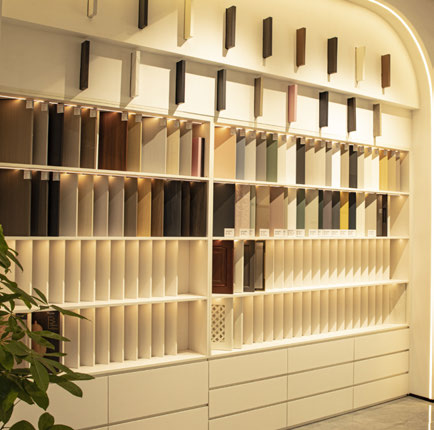
Visible finishes should not be approved from small digital images alone. Lighting, grain direction, gloss, texture and adjacent materials can change the result. Use physical finish samples, hardware samples, control samples or a material board. For repeated guestrooms, a full-scale mockup room can expose dimension conflicts and visual mismatches before they are multiplied across the project.
The approval record should include photographs, sample codes, signatures or digital approval status, date and revision. Keep one approved control sample available for production and final inspection. The OKBuild Center in Foshan is organized to support room and material review before batch production.
7. Freeze drawings and specifications before mass production
Production should start from an approved package: shop drawings, dimensions, bill of materials, finish codes, hardware schedules, technical requirements and packaging instructions. Any later change should show who requested it, what it affects, whether the price changes and whether the delivery programme changes.
Freeze dates matter. If one item remains unapproved, determine whether it blocks the whole room package or can move in a later phase. This is where a project-level schedule is more useful than separate supplier promises.
8. Inspect against the approved evidence
Quality control is not a final visual glance. The inspection plan should be written before production and tied to the risk of each product. It may include incoming-material checks, first-article review, in-process measurements, finish comparison, hardware operation, assembly checks, quantity verification and pre-shipment inspection.
Inspectors need the latest approved drawings and samples. A product can match the supplier’s own standard and still be wrong for the project. Nonconformities should be recorded with photographs, quantities, corrective action, reinspection status and the person approving release. Review OKBuild’s broader manufacturing and quality-control approach for the relationship between production evidence and shipment approval.
9. Design the packing and labeling system around the site
Export packing protects the product, but project labeling helps the site use it. A clear label can include project name, building, floor, room type, room number, product code, package number, quantity and handling note. The packing list should use the same coding system as the BOQ and room schedule.
Discuss fragile surfaces, moisture protection, edge protection, hardware cartons, mixed packages and replacement parts before loading. For phased projects, separate goods according to the receiving and installation sequence. A full container with excellent products can still create site delay if nobody can identify where each package belongs.
10. Confirm trade terms, shipping documents and receiving responsibility
Use a named place and the correct version of the selected Incoterms rule in the sales contract. The terms allocate tasks, costs and risks, but they do not replace a detailed contract, product specification or local import review. The International Chamber of Commerce guidance on Incoterms 2020 is a useful official starting point.
Before shipment, align the commercial invoice, packing list, bill of lading instructions, product descriptions, country-of-origin information and any destination documents. The importer should confirm tariff classification, duties, permits and product compliance with a qualified customs broker or the relevant authority. Also agree who checks container condition, loading photographs, seal details, arrival notice, unloading and claims documentation.
What should you send in the first hotel sourcing inquiry?
A strong first inquiry helps a supplier respond to the real project instead of sending a generic catalog. You do not need every detail to begin, but you should separate confirmed information from assumptions.
| Information | Minimum useful detail | Better detail |
|---|---|---|
| Project context | Country, hotel type and current stage | Opening or handover sequence, site constraints and decision team |
| Room information | Room types and room counts | Plans, elevations, room schedule and repeated-unit matrix |
| Product scope | Priority categories | BOQ linked to drawing and room references |
| Quality direction | Target standard or reference images | Materials, finishes, hardware, performance and approved brand requirements |
| Commercial basis | Destination and target delivery window | Budget direction, preferred trade term, shipment phases and receiving plan |
Useful files include PDF floor plans, CAD drawings, Excel BOQs, room schedules, finish schedules, product lists and reference photographs. File names and revision dates should be clear. If different consultants issue different documents, provide a document register so the supplier knows which version controls.
One supplier or several specialist factories?
No single model is correct for every hotel. A specialist factory can be the right choice for a well-defined category. A coordinated multi-category partner becomes more valuable when products share approvals, room types, shipment phases or finish decisions.
| Approach | Best suited to | Main management requirement |
|---|---|---|
| Direct specialist factory | One stable category with clear specifications and sufficient volume | The buyer controls drawings, inspection, shipping and interfaces with other suppliers |
| Several direct factories | A buyer with an experienced China procurement and QC team | Central revision control, normalized contracts and consolidated logistics |
| Coordinated project package | Hotels combining furniture, finishes, bathroom products, doors and lighting | One project record must still preserve factory-level accountability and evidence |
“One-stop” should not mean hiding the supply chain. Ask which products are manufactured directly, which are sourced, who signs off quality and how factory-specific documents will be retained. The value of coordination is a clearer project process, not a vague promise that every category comes from one production line.
Common red flags when comparing China hotel suppliers
- A price without a specification basis. The quotation lists product names but not materials, dimensions, hardware, finishes or exclusions.
- Certificates that cannot be connected to the offered model. The company name, product description, standard, date or issuing body does not match the proposal.
- No revision control. Drawings and finish references circulate through chat messages without a controlled approval record.
- Mass production before sample approval. The supplier treats a deposit as approval of unresolved technical details.
- Inspection only after packing. Important dimensions, assemblies and hidden components can no longer be checked efficiently.
- Unclear export scope. Packing, inland transport, customs documents, loading and insurance are assumed rather than written.
- Communication that avoids project questions. A capable supplier should ask about room types, quantities, standards, destination and programme.
How should a hotel procurement timeline be planned?
Avoid choosing one generic lead time for the entire package. Build the programme backward from the required site date and separate design review, sample preparation, mockup approval, material procurement, production, inspection, corrective action, packing, consolidation, vessel booking, transit, customs and site receiving.
Custom joinery, loose furniture, lighting and imported finishes may have different critical paths. Chinese public holidays, factory capacity, raw-material availability, destination congestion and project changes can alter the plan. Use milestone dates and approval dependencies rather than treating the supplier’s production estimate as the complete delivery schedule.
Include reasonable time for failed samples, drawing comments and reinspection. Those allowances are not wasted time; they are part of a controlled procurement plan. The OKBuild project services workflow shows how review, material matching, quotation, sampling, production, inspection and consolidated delivery connect.
How OKBuild supports hotel material sourcing from Foshan
OKBuild is an independent building materials brand based in Foshan, China, serving hotel and other commercial projects worldwide. Its project model connects drawings and BOQ review with material selection, custom manufacturing, supplier coordination, quality control, packing and export delivery.
Hotel teams can begin with a priority category or request a broader room-by-room package. The hotel building materials and FF&E solution explains how guestrooms, suites, bathrooms, corridors and public areas can be organized under one project scope. Buyers can also review commercial project cases and the company’s Foshan manufacturing group profile before starting a quotation.

Frequently asked questions
Can I request a quotation before the hotel BOQ is complete?
Yes. Send the available floor plans, room types, room counts, reference images, target standard, destination and priority categories. The supplier should identify assumptions and missing decisions instead of presenting a preliminary budget as a final quotation.
Can furniture, doors, tiles, sanitary ware and lighting ship together?
They can be coordinated for consolidated shipment when production timing, packing compatibility, loading sequence, documentation and destination requirements allow it. Consolidation should be planned by shipment phase rather than forced if one delayed category would hold the entire project.
Do I need to visit China to source hotel materials?
Not always. Drawings, video reviews, couriered samples, third-party inspections and documented approvals can support remote procurement. A visit is especially useful when the project needs full-scale room review, many visible finish decisions or several factory evaluations in a short period.
Should a sample room be built before mass production?
A sample room is strongly useful for repeated guestrooms because it tests dimensions, material combinations, lighting, bathroom interfaces and installation details together. For simpler scopes, approved samples, shop drawings and a smaller mockup may provide enough control.
How do I compare hotel building material quotations fairly?
Normalize the specification, quantity, accessories, exclusions, packing, trade term, payment basis and delivery assumptions. Compare landed scope and project risk, not only unit price. Any alternative should be shown separately from the specified option.
What is the first file OKBuild needs?
A floor plan, room schedule, BOQ or product list is enough to start. Include the project country, current stage, required categories, target standard and next decision date so the first review can focus on the actual procurement path.
Start with a controlled project brief
The fastest way to improve a hotel material quotation is to improve the information behind it. Send the latest drawings, BOQ, room schedule or category list. OKBuild can review the scope, identify missing decisions and organize the next step around material matching, samples, manufacturing, quality control and delivery.
Send Your Hotel Drawings or BOQ