

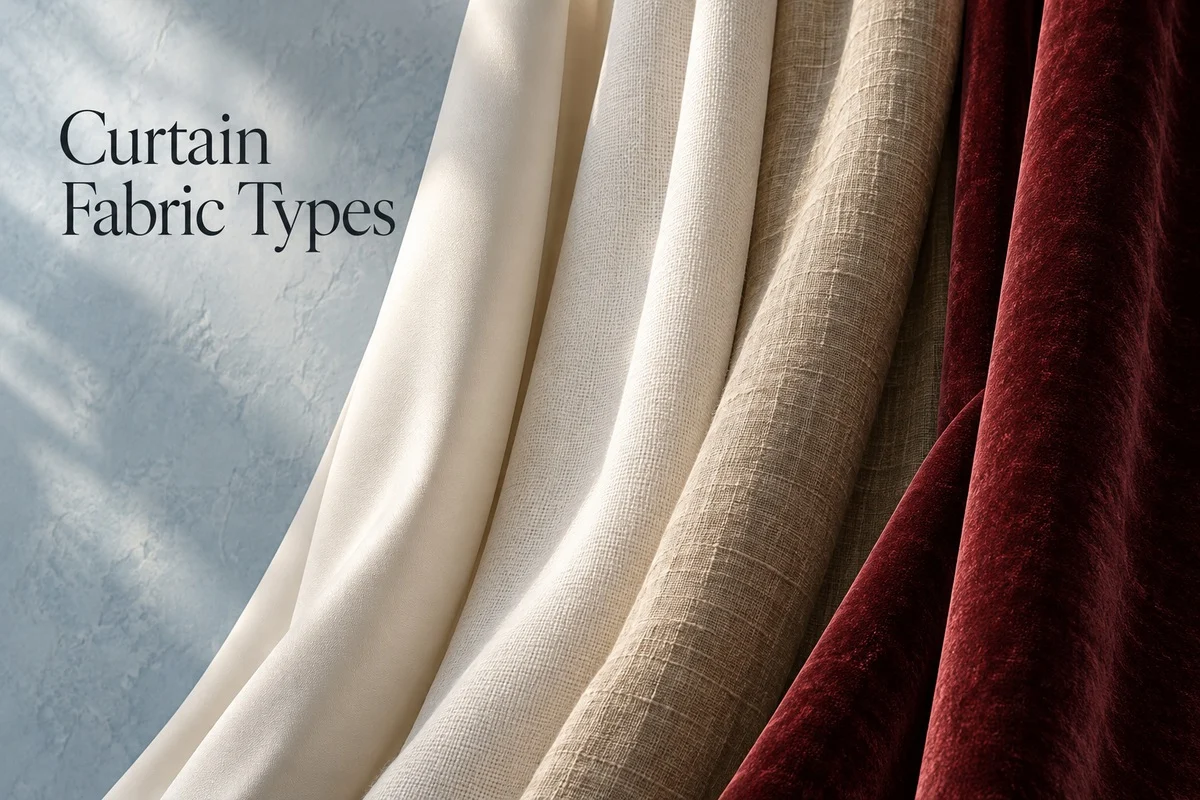
A curtain fabric that looks right on a swatch card can still hang badly, let in too much light, or need a cleaning method the hotel can’t use. The fiber name tells you less than you’d expect, because weave, finish, lining, and panel construction shape the finished curtain as much as the fiber does. Set each room’s needs for light, privacy, appearance, and care first, then narrow the options with physical samples.
Start With the Room’s Light, Privacy, and Care Needs
Write separate fabric briefs for guestrooms and public areas. A guestroom may need filtered daylight while guests are up and much stronger light control for sleep. A lobby or restaurant is more likely to care about glare, how the fabric reads across a large glazed wall, and whether it can be cleaned without disrupting service.
For each area, record the look, daytime and nighttime privacy, light-control target, the cleaning method the hotel can actually use, color reference, quantity, and any brand or local requirements the project team has identified. Use the brief to rule out unsuitable fabrics before anyone compares colors. If one fabric can’t meet every need in a room, plan a separate sheer and closing layer instead.
Compare Curtain Fabric Types Using Physical Samples
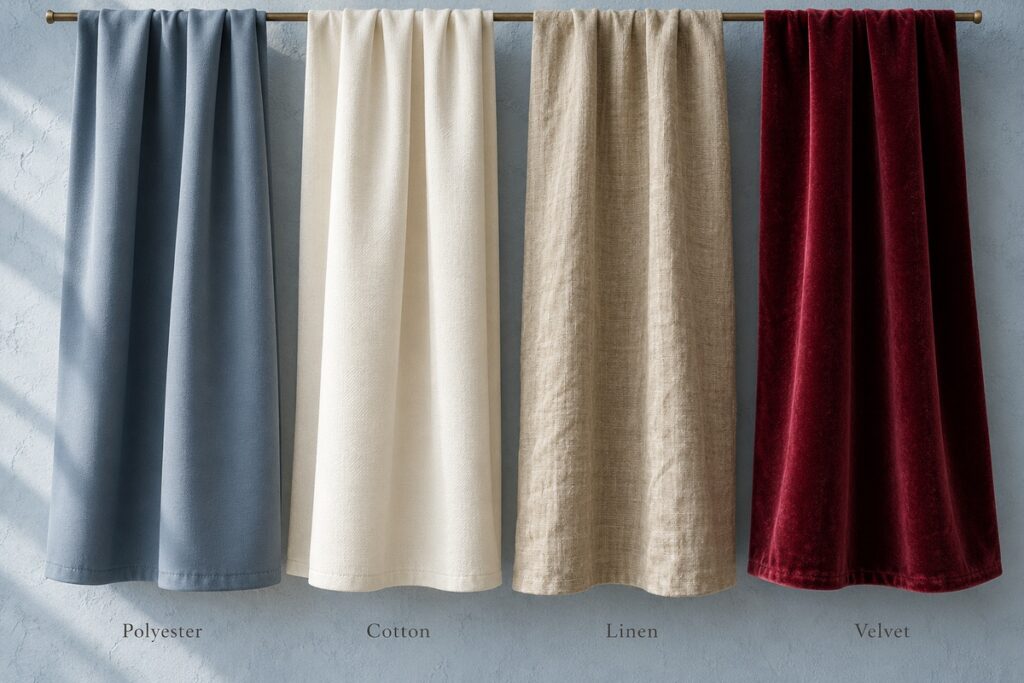
Polyester, cotton, and linen are fibers, while velvet is a pile construction whose fiber content needs its own check. None of these names says anything about blackout, fire, acoustic, or cleaning performance, so compare each offered product code against the same room brief.
| Fabric | Why It’s Considered | What Decides the Choice |
|---|---|---|
| Polyester or a blend | Smooth, textured, or linen-look surfaces | Actual fiber mix, sheen, and how the fabric folds |
| Cotton | A woven finish for a relaxed room scheme | Weave density, creasing, and the proposed lined construction |
| Linen | Visible yarn texture and a less uniform finish | Whether the hotel accepts the sample’s texture, shade variation, and creasing |
| Velvet | A pile surface with a richer look | Pile direction, apparent shade, and marks from handling |
Polyester and Polyester Blends
Polyester covers smooth cloth, textured linen-look fabrics, and coated constructions, so it gives designers several starting points. Two polyester fabrics still aren’t interchangeable just because they share a fiber, so check the exact composition of each shortlisted blend, especially one sold mainly on its look.
For a matte guestroom scheme, hang the cloth under the room’s lighting and watch how the sheen shifts across the folds. Keep the product code attached to the sample so the finish you choose is the one that gets ordered.
Cotton
Cotton suits a relaxed woven look, but weave density decides how much light comes through and how the fabric drapes. A loose weave and a dense one can call for different layer choices even when both are sold as cotton curtains.
Review the cotton with its proposed lining next to the wall finish and upholstery, and check whether the combination holds the folds the designer wants. Confirm the cleaning method for the lined panel, since a cotton label doesn’t tell you whether the finished curtain can be washed.
Linen
Linen makes sense when visible yarn texture and some shade variation are part of the design. Agree on how much variation and creasing the hotel will accept before ordering, and set the reference with a larger hanging sample, since a uniform product photo sets the wrong target for a textured cloth.
If the hotel wants the linen look with a different composition, treat a linen-look blend as its own candidate. Record its actual fiber mix and care instructions instead of approving it under the linen sample’s description.
Velvet
Velvet is chosen for its pile, and pile direction changes the apparent shade, so neighboring panels can look different even under the same color name. Judge it from more than one angle, using a hanging sample that shows folds, seams, and adjacent panels in the intended light.
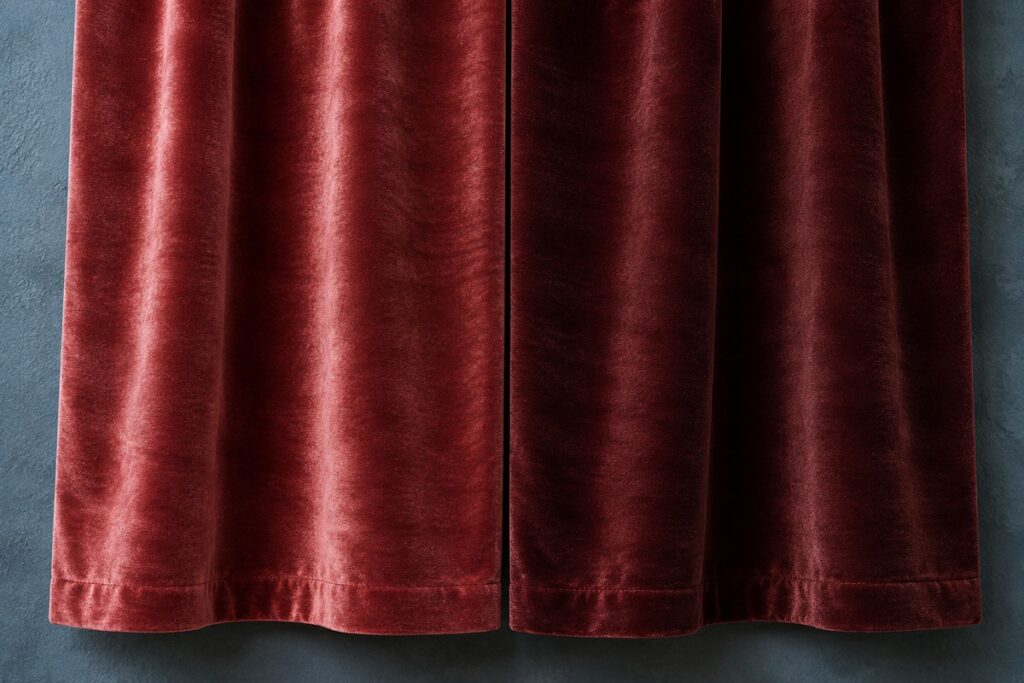
Use that sample to agree on panel direction and check for handling marks, then note the approved orientation in the fabrication record so the pile runs the same way across the room. Check the fiber content and cleaning method separately from how the velvet looks.
Treat Sheer and Blackout as Construction Choices
Specify a sheer by the light transmission and view you want, and blackout by the light-control result you need. A blackout curtain might use an opaque face fabric, a separate lining, a backing, or a coating, so ask the supplier which construction is being offered. For a guestroom that needs filtered daylight by day and real darkness at night, compare a sheer paired with a separate closing layer, and review the layers together.
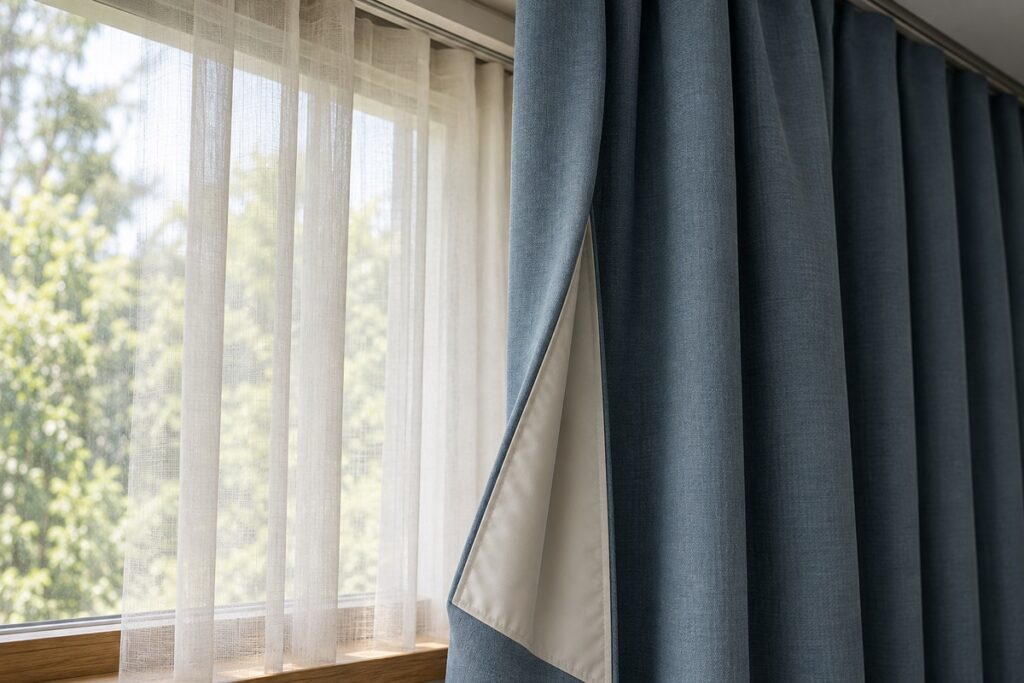
Light also gets in around the curtain, not only through it. An opaque fabric can’t close gaps at the head, sill, sides, or center overlap on its own, so judge room darkening in a representative installation. When those gaps or the panel weight affect the fabric choice, check the dimensions and hardware against the hotel window treatment specification.
What to Request Before Approving a Fabric
Approve one identified fabric in its complete construction, with the sample and the documents describing the same offer.
| Review Item | What the Project Team Needs |
|---|---|
| Fabric identity | Supplier, product code, color, fiber composition, usable width, face direction, and quantity |
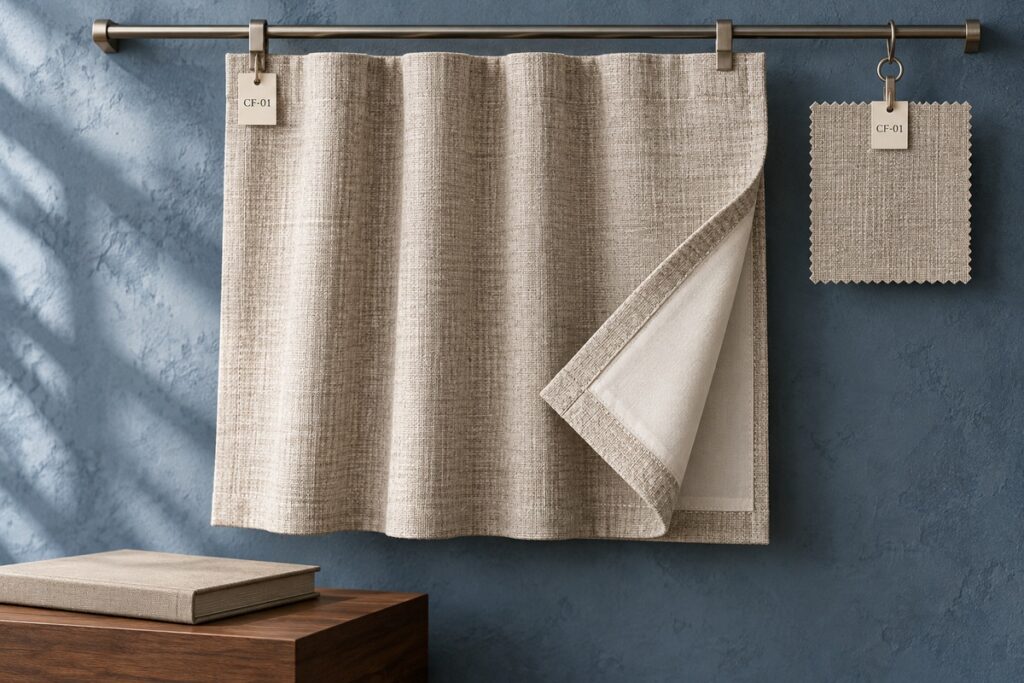
| Physical sample | Color and texture in project lighting, plus a hanging panel where folds, pattern, pile, or opacity matter |
| Complete construction | Face fabric with the proposed lining, backing, or coating, plus cleaning instructions for the finished curtain |
| Appearance control | Approved reference sample, acceptable variation, and a batch or dye-lot plan for rooms that must match |
| Performance evidence | Documents addressing the project’s stated requirements for the offered fabric and any lining or coating |
Match Documents to the Finished Curtain
For fire requirements, brand standards, or local acceptance, the project team sets the criteria and names the approving authority. Make sure the documents name the offered product and cover the construction that was tested, because a face-fabric report doesn’t automatically extend to an added lining or coating.
If the cleaning method conflicts with hotel operations or required evidence is missing, fix that or move to another candidate before production. Record the accepted fabric code, construction, and control sample together, and reopen the affected checks if a material is substituted later.
Bring the Fabric Brief to OKBuild
At OKBuild, we make soft furnishings on our own or directly operated production lines. We can compare curtain fabric options against your room brief, prepare the relevant samples, and carry the approved fabric and construction into a custom order. On hotel projects, curtains can sit in the same package as bedding, cushions, and other soft furnishings, so the fabrics get reviewed together.
Send us the project brief with room types, quantities, and reference images or drawings. Include your fabric shortlist and any project requirements already set, and we’ll identify the samples and product data needed for the next review.
Curtain Fabric FAQs
Can One Curtain Fabric Work Across Guestrooms and Public Areas?
Yes, if the fabric meets each area’s requirements, though the finished construction may differ. A guestroom might need a lining or second layer that the lobby doesn’t. Keep a separate construction reference for each area so a shared face fabric doesn’t hide those differences.
Can a Sheer Provide Privacy After Dark?
Don’t assume it will. Once the room lights are on, people outside can often see far more through a sheer than they could during the day. Check the proposed sheer at night from the relevant viewing positions, and if privacy falls short, pick a denser sheer or add a closing layer.
How Should Hotels Plan for Matching Replacement Panels?
Decide whether to order spare panels or hold back fabric when the first batch is approved. Keep the product code, color, batch or dye lot, face direction, and care instructions with each room group. A later order under the same color name can look different next to existing curtains, so compare the replacement fabric with the retained control sample before new panels are made.