

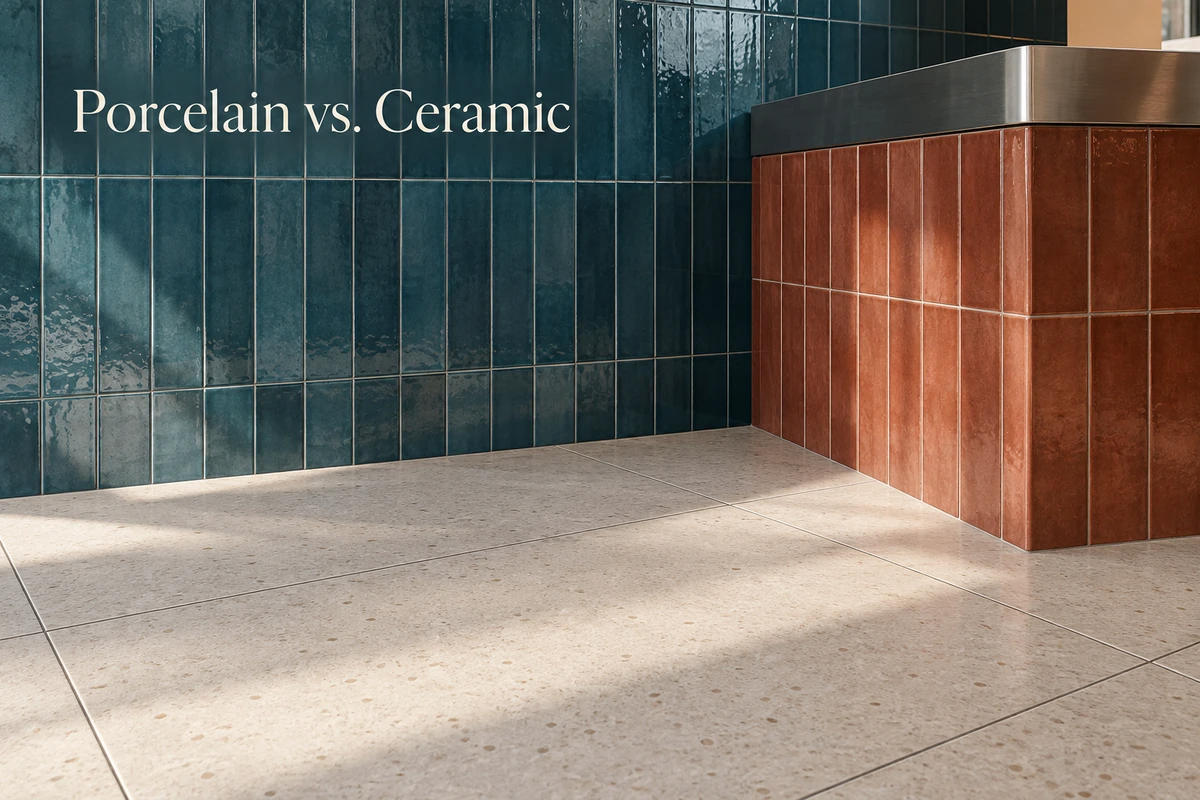
Choose porcelain or ceramic tile by its location, moisture exposure, traffic, and documented performance. Porcelain is a useful starting point for moisture-exposed floors. Non-porcelain ceramic can be a practical choice for decorative walls and indoor floors when the selected product suits the application. Neither material name proves slip resistance, wear resistance, or load suitability.
Porcelain is a type of ceramic tile. In this comparison, “ceramic tile” means the non-porcelain category commonly sold under that name. At OKBuild, we recommend making the choice area by area, then approving the exact tile and finish before committing to quantities.
What Is the Difference Between Porcelain and Ceramic Tile?
Water absorption is the defining difference. The Tile Council of North America (TCNA) defines porcelain as tile with water absorption of 0.5% or less, measured using ASTM C373. Non-porcelain ceramic exceeds that threshold. That threshold classifies the tile body. Commercial floor selection also needs evidence for the surface and the intended use.
| Selection factor | Porcelain tile | Non-porcelain ceramic tile | What it changes in a commercial project |
|---|---|---|---|
| Water absorption | 0.5% or less under ASTM C373; ISO 13006 lists dry-pressed tile at this level as Group BIa | Greater than 0.5%; the actual value varies | Use absorption data to assess moisture exposure, alongside the approved application and installation system. |
| Suitable locations | Available for floors, walls, and other applications, depending on the product | Available for walls and floor applications, depending on the product | Select by the exact product’s stated use. A wall-only tile does not become floor tile because its color matches. |
| Wear requirements | Surface performance still depends on the glaze or unglazed finish | Floor-rated options need product-level wear evidence | Compare the applicable abrasion result and manufacturer’s use recommendation with actual traffic. |
| Cutting and installation | Generally harder to cut; confirm tooling and setting-material requirements | Generally easier to cut | Include cutouts, edges, layout complexity, and installer requirements in the quotation. |
| Cost | Often carries a higher material price, but quotations vary | Often offers a lower material price, but decorative products can differ | Compare the complete installed scope instead of assuming a fixed percentage difference. |
| Maintenance | Cleaning depends on the selected finish and grout | Cleaning depends on the selected finish and grout | Review care instructions and cleaning access; the material category alone does not define the maintenance workload. |
TCNA’s porcelain FAQ supports the cutting distinction. The same guidance adds that the difference generally matters little to the end user when the installer uses the right materials. Review floor or wall use, abrasion, breaking strength, chemical resistance, and friction data against the project brief. “Commercial grade” is too broad to identify the required performance.
Which Tile Suits Each Location?
Decide location by location, because walls, dry floors, busy public routes, and wet floors each need different evidence.
Decorative Walls and Backsplashes
Start with ceramic tile when the main decision is the wall’s appearance, format, and budget. A reception feature wall or break-room backsplash does not need the same wear specification as the floor beneath it. Porcelain remains an option when its design, format, or documented application better serves the brief.
Review several pieces together to judge color variation, pattern direction, grout color, and exposed edges. For a backsplash exposed to splashes or frequent cleaning, check the selected tile’s care instructions and chemical-resistance information. The wall assembly and fixing method also need to suit the tile’s size and weight. Floor suitability alone does not resolve those details.
Ordinary Indoor Floors
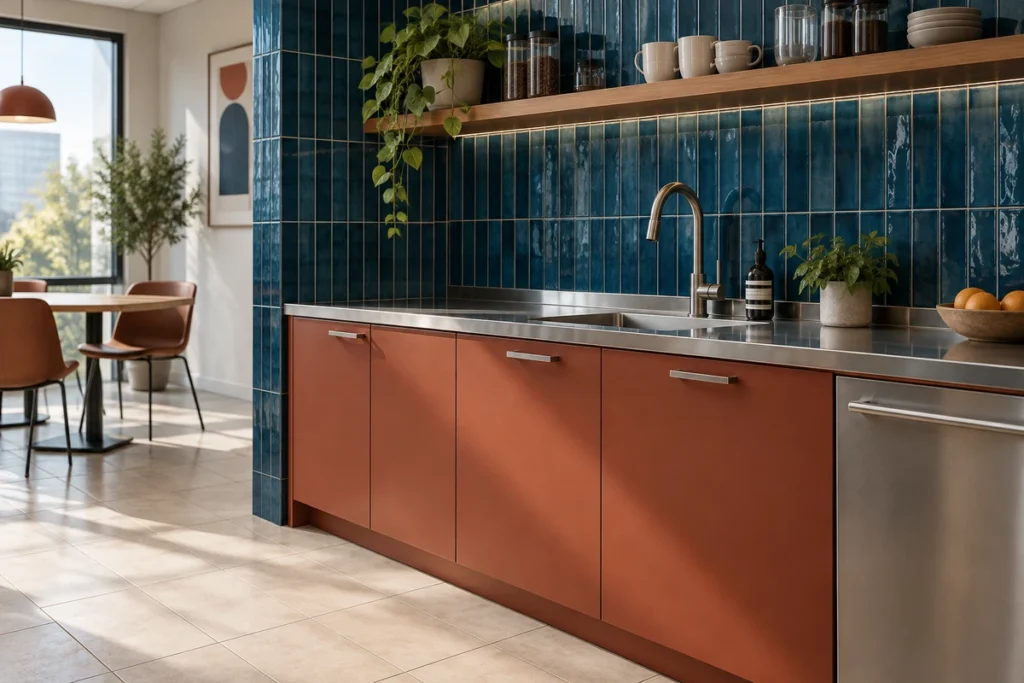
Compare both materials for dry offices, meeting rooms, and other indoor areas with moderate use. Non-porcelain ceramic is not automatically a wall-only product. TCNA notes that ceramic glazes can be highly durable, so the selected product’s tested surface matters.
Ask for the stated floor application, abrasion data, and cleaning guidance. Then describe the real use: staff footwear, visitor traffic, occasional cart movement, and dirt carried in from outside. A floor away from an entrance needs a different brief from the main access route, even when both appear on the same finish schedule.
Busy Lobbies, Corridors, and Public Areas
Choose the product that documents suitability for the traffic and cleaning regime. A porcelain label is not enough to approve a hotel lobby, retail entrance, or public corridor. Identify concentrated walking routes, tracked-in grit, rolling luggage, and service carts before comparing candidates.
Glazed and unglazed tile use different wear tests. ASTM C1027 measures visible abrasion of a glaze, while ASTM C1243 measures deep abrasive wear of unglazed tile. Where wheeled or concentrated loads matter, ask the project specifier to review breaking-strength data and the floor assembly. The installer should confirm substrate and setting requirements for the selected format.

Wet-Area Floors
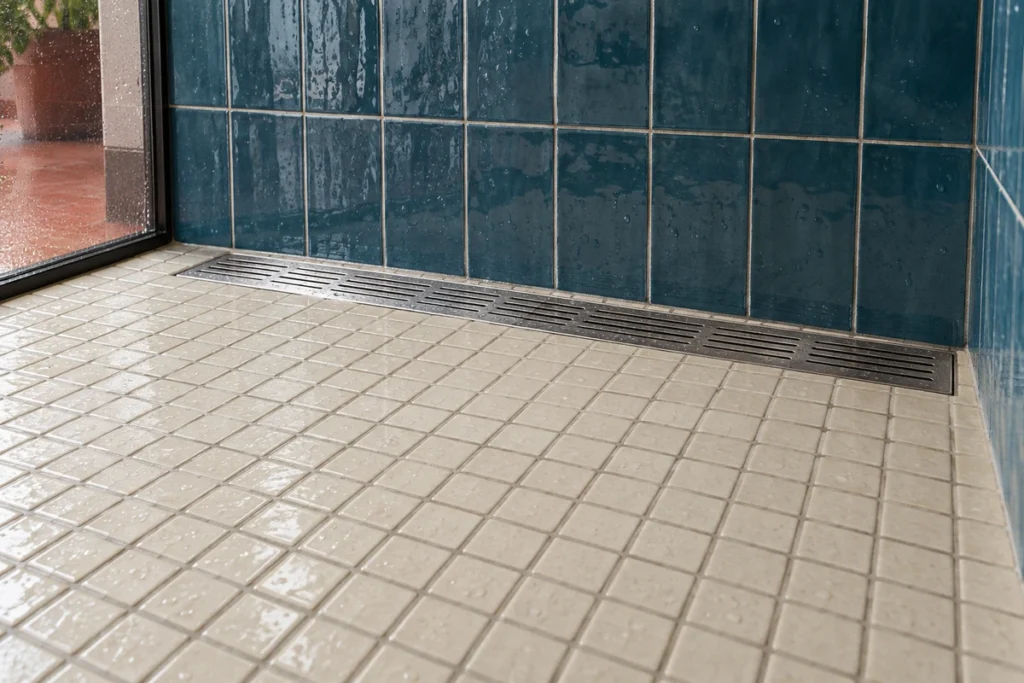
Shortlist porcelain where low body absorption is a priority, then select the finish for the wet conditions. A restroom floor, shower floor, and food-service work area face different contaminants. A matte appearance is not evidence of slip resistance. Low body absorption alone does not justify a polished finish on a wet floor either.
TCNA identifies ANSI A326.3 as the test method for dynamic coefficient of friction (DCOF) on hard-surface flooring. The accompanying FAQ warns that DCOF alone cannot determine suitability. Water, soap, grease, footwear, maintenance, drainage, and slope all change the slip risk. Request the test report and product-use classification, and have the local specifier assess them against actual conditions.
How Should You Compare Installed Cost and Maintenance?
Compare ceramic vs. porcelain tile using quotations for the same area, layout, and finish standard. A tile-only price leaves out work that can change the selection: substrate preparation, cutting and drilling, setting materials, grout, trims, labor, freight, and spare stock. If porcelain still costs more, a documented property or design requirement should justify the difference.
Maintenance deserves its own comparison. Obtain the cleaning instructions for the exact surface and grout, then check them against the facility’s equipment and cleaning routine. Use a representative sample or mock-up to see whether the proposed method removes likely soil without changing the finish.
How Does OKBuild Move From Approved Samples to Production?
At OKBuild, we manufacture tiles and other commercial building materials through our own or directly operated production lines. Our manufacturing workflow connects approved specifications and samples with production checks, finish comparisons, product identification, and packing. For a tile package, the agreed reference needs to identify what will be made and what the buyer will accept.
Area Schedule and Samples
Use our commercial tile range to develop an area-by-area selection, then confirm the details needed for production. Record the product code, size, thickness, finish, edge treatment, grout color and joint width, trim requirements, and quantity for each location. Keep applicable performance reports tied to the exact model and finish.
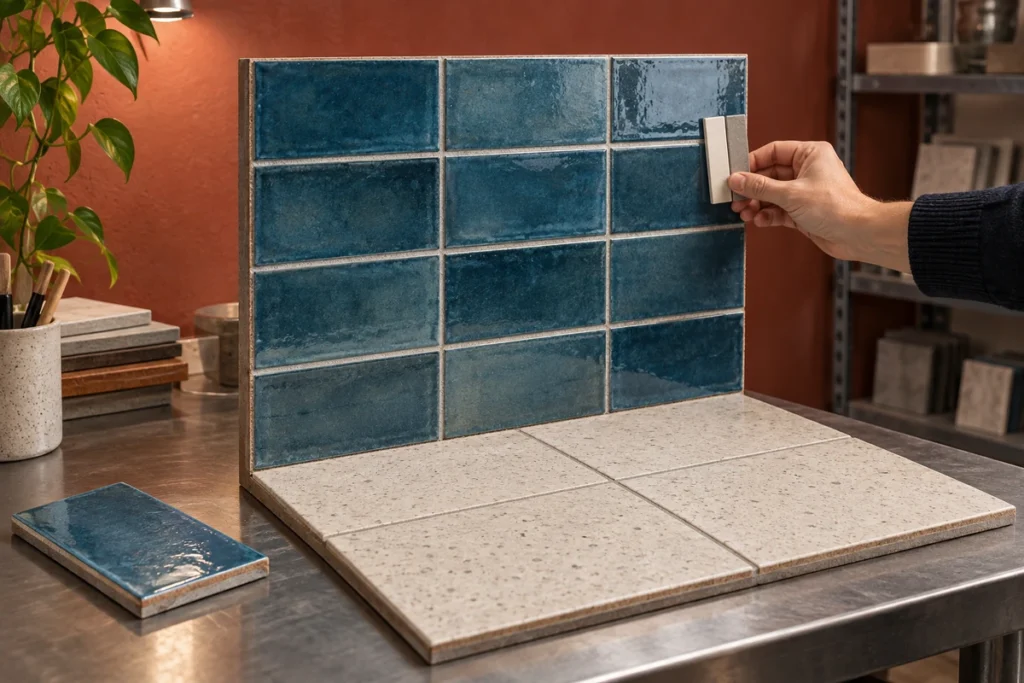
Approve enough sample pieces to show the intended variation and pattern. Where the result depends on lighting, joints, adjacent finishes, or a repeating layout, request a mock-up. OKBuild can provide project-specific 1:1 mock-up support when the agreed scope calls for it. A mock-up checks appearance and interfaces, but it does not replace laboratory evidence for slip, abrasion, or other properties.
Shade, Packing, and Spare Stock
Before production release, agree on the shade and size-group identifiers, inspection criteria, and packing by area or shipment phase. Separate installation waste from the reserve for future repairs. Set those quantities with the installer and owner based on the layout, cut pattern, and replacement plan instead of applying an unexplained percentage.
Starting a Project Review
Send your floor plans or finish schedule, quantities by area, destination country, required performance criteria, budget direction, and target dates for an OKBuild project review. We can review tile options, samples, production requirements, and the information needed for a quotation. The local project team should approve the installation system and applicable building requirements before the order is released.
FAQ
How Can You Tell the Difference Between Ceramic and Porcelain Tile?
Use the exact product code and its technical documentation, because color, printed pattern, and appearance cannot establish the classification. Request the water-absorption result and its ASTM C373 test method. A valid Porcelain Tile Certification Agency (PTCA) certification is evidence of that absorption criterion, not approval for every commercial application.
Is Porcelain Tile Always Suitable for Outdoor Use?
No. According to TCNA, porcelain is usually frost resistant but not always, and some non-porcelain tiles are suitable for exterior use. Check the product’s outdoor recommendation, its freeze-thaw evidence where freezing occurs, and an installation system suited to exposure and drainage.
Is Glazed Porcelain the Same as Through-Body Porcelain?
No: glazed porcelain has a surface layer whose appearance can differ from the body beneath it. Through-body porcelain generally refers to unglazed porcelain with color extending through the tile. Ask to see a cut edge when edge appearance matters, and review abrasion data separately from body color.