

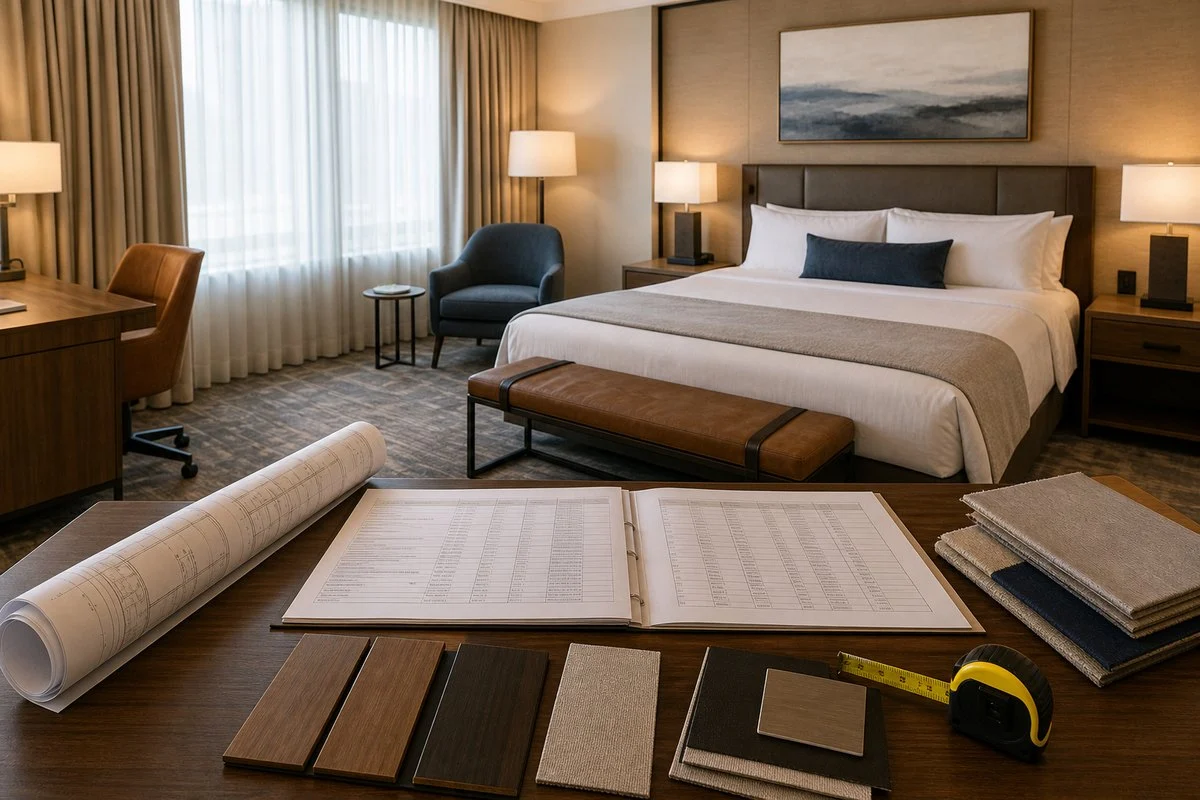
Do not place a hotel FF&E order until one controlled schedule records the scope, quantities, approved references, acceptance criteria, commercial basis, and delivery responsibilities. FF&E means furniture, fixtures, and equipment.
The contract should define the scope boundary and assign each approval, inspection, commercial, and logistics duty. Those assignments control the rest of the procurement process because the same item may sit in FF&E, OS&E, millwork, or construction under different packages.
What Is Included in a Hotel FF&E Scope?
A hotel FF&E scope covers the movable items and contract-defined fixed items required in each listed area. Organize the scope by room type and location. Within a broader commercial fit-out materials package, the signed contract and approved schedules still define each supplier’s responsibility.
Guestroom and Suite FF&E
Guestroom FF&E usually includes beds, headboards, nightstands, desks, seating, tables, luggage benches, minibars, mirrors, lamps, artwork, and window treatments. Suites may add dining, living, or work-area furniture.
Fixed casegoods, vanities, and built-in joinery may belong to FF&E or a separate millwork package. Record each item against its room type, drawing, finish code, hardware, quantity, and installation scope. Generic labels such as “king room” fail when accessible rooms, connecting rooms, and suites use different dimensions.

Lobby, Restaurant, and Amenity FF&E
Public-area FF&E may include reception desks, lounge seating, restaurant furniture, bar furniture, host stands, decorative lighting, planters, artwork, and loose fitness or poolside items. Each area needs its own review because traffic, cleaning methods, layouts, and visible finishes differ. The commercial furniture scope separates casegoods, loose furniture, upholstered seating, and custom pieces so buyers can compare equivalent quantities and specifications.

FF&E for Back of House Areas Covered by Contract
Back of house FF&E includes only the staff and service-area items named in the contract. Typical items may include office furniture, staff lockers, storage units, shelving, housekeeping carts, break-room furniture, and loose work tables.
Commercial kitchen equipment, laundry systems, cold rooms, and maintenance equipment often use specialist packages. Assign every item to an area, supplier, installer, utility requirement, and approval owner. Otherwise, the item can disappear between the FF&E, equipment, and construction scopes.
Boundaries Between FF&E, OS&E, and Construction Work
Define FF&E, operating supplies and equipment (OS&E), and construction work in a written responsibility matrix. FF&E generally covers scheduled furniture, fixtures, and equipment. OS&E usually covers linens, tableware, kitchen utensils, housekeeping tools, and guestroom supplies. Construction work usually covers the building, permanent systems, and site work.
Some fixed decorative items may be assigned to different packages. When a project also includes doors, flooring, lighting, sanitary ware, or stone, keep those commercial project product categories separate unless the contract places them in the FF&E schedule.
| Boundary question | Required record | Risk if left open |
|---|---|---|
| Who supplies the item? | Named supplier and written exclusion | Missing or duplicate scope |
| Who provides power, plumbing, backing, or blocking? | Responsible trade and drawing reference | An item arrives without a usable site interface |
| Who unloads, moves, assembles, and installs it? | Handling and installation owner | Site delay, damage, or disputed labor |
| Who tests and accepts the item? | Acceptance criteria and approval role | Inconsistent inspection or disputed approval |
How Should a Hotel FF&E Schedule Be Structured?
A usable hotel FF&E schedule connects each item to its quantity, specification, approval, purchase, and delivery records. Keep one master schedule with a revision number, issue date, and named document owner. Use the same item code across drawings, quotations, purchase orders, inspections, packing lists, and site labels.
Item Code, Description, and Location
Give each item a unique code. Write a description that identifies the product without relying on a photo or room name. Add the building, floor, room, area, and exact placement when these details affect delivery or installation. If one chair uses different upholstery in two areas, create separate codes or controlled suffixes rather than hiding the difference in a general note.
Room Type and Quantity
Build quantities from the approved room matrix and area count. Separate the base quantity, spare allowance, and total order quantity.
Check accessible rooms, suites, connecting rooms, and public areas before multiplying a typical-room list across the hotel. If a room count or layout changes, revise the schedule and show the quantity effect before the purchase order changes.
Dimensions, Materials, and Finish References
Record overall dimensions, critical interface dimensions, construction, visible finishes, fabrics, hardware, and accessories. Link each field to its controlling drawing, specification, finish board, or approved sample. A product image can guide selection, but it does not verify hidden construction, exact color, scale, or performance. If we propose an alternative, we list it separately so the buyer can compare every change.
Drawing, Sample, and Approval Status
Track drawings, finish samples, material samples, prototypes, and mockups as separate approvals. One approval does not release every product detail.

Use clear status labels:
- not submitted
- under review
- revise and resubmit
- approved with comments
- approved for production
For each approval, enter the revision, submission date, approver, comment reference, and production release date. An informal message or unmarked image is not a controlled approval.
Supplier, Cost, and Order Status
Record the quoted supplier, selected supplier, quote reference, currency, unit price, extended price, packing, freight basis, payment terms, and exclusions. Add the applicable tax or duty basis when it affects the comparison. Track the order through defined stages, such as quotation received, clarification closed, purchase order issued, deposit paid, production released, and balance due. Preserve the change history so an old price is not compared with a new specification.
Delivery and Installation Milestones
Use separate dates for drawing release, sample approval, material readiness, production, inspection, packing, shipment, site arrival, installation, and handover. Link dependent dates instead of treating factory production time as the full lead time.
Name the party responsible for booking, import coordination, unloading, storage, room distribution, assembly, installation, protection, and waste removal. For phased work, match each package and shipment lot to its building, floor, room type, or installation zone.
What Must Buyers Confirm Before Placing a Hotel FF&E Order?
Before ordering, confirm the final scope, approved production references, commercial basis, inspection rules, and logistics responsibilities. Cite the final schedule and revision in the purchase order. Disconnected emails do not provide a reliable order basis.
Final Scope and Written Exclusions
Issue a final scope matrix that lists included items, quantities, services, documents, spares, packing, installation work, and exclusions. Close interfaces such as wall backing, power outlets, plumbing connections, floor fixing, sealant, touch-up work, and final cleaning.
If one party supplies an item and another installs it, assign four duties in writing:
- verifying site dimensions
- issuing installation instructions
- reporting transit or site damage
- accepting the completed installation
Approved Drawings, Samples, and Mockup References
Release production against a dated package of approved drawings, schedules, finish references, and samples. The approval register identifies which reference controls dimensions, construction, finish, hardware, comfort, and site interfaces.
A mockup room can expose conflicts before they repeat across guestrooms. Record what the team accepted and what still requires correction. Keep an approved control sample or signed reference available for production checks and final inspection.
Comparable Commercial Terms and Order Basis
Compare suppliers on the same specification, quantity, accessories, spares, packing standard, installation scope, currency, payment basis, trade term, named place, and delivery assumptions. A lower unit price does not reduce project cost when it excludes required hardware, export packing, drawings, or site services.
For cross-border orders, hotel material sourcing from China adds supplier coordination, export packing, shipping documents, and import responsibilities to the comparison. Price any proposed alternative separately, then obtain approval before it replaces the specified item.
Inspection Plan and Acceptance Criteria
Set the inspection plan before production begins. The plan should define:
- inspection stages and release points
- sample size or inspection method
- dimensional tolerances and appearance limits
- functional checks
- required records and photographs
- authority to accept, reject, or release the goods
Inspect against approved drawings, specifications, and control samples. If the order requires first-article checks, in-process inspection, pre-packing checks, or third-party inspection, write those steps into the purchase order. Define how the team will record, correct, recheck, accept, or reject a nonconformity.
Logistics and Site Receiving Responsibilities
Confirm packing, labels, shipment lots, trade terms, documents, insurance responsibility, import coordination, arrival notices, unloading equipment, storage, site access, and damage reporting. If OKBuild coordinates several suppliers in one shipment, the contract should name us as the party responsible for consolidation and document accuracy.
Before ordering, check door and elevator limits, delivery hours, floor loading, dry storage capacity, installation sequence, and approval authority. These site limits can change package size, delivery order, and handling cost.

Frequently Asked Questions
Who Is Responsible for Managing FF&E Procurement in a Hotel Project?
The owner should name one accountable FF&E lead, even when several consultants and suppliers perform the work. The owner may assign this role to its procurement team, an interior designer, a project manager, a procurement agent, or an FF&E consultant. The contract should state who controls the schedule, approvals, commercial comparison, change log, purchase orders, inspection records, and delivery status. In a typical responsibility matrix, designers approve design intent, operators confirm operating needs, and qualified local professionals address code, engineering, and site approvals.
When Should Hotel Teams Start FF&E Planning for a New Hotel Project?
Start FF&E planning once the team knows the room types, design direction, target standard, and opening sequence well enough to build a preliminary scope. Market review can begin before every detail is final. Custom items should enter production only after the team approves the drawings, finishes, interfaces, quantities, and approval roles. Build the program backward from the required site date, with time for samples, mockups, revisions, production, inspection, shipping, customs, installation, and handover.
How Does FF&E Procurement Change When a Hotel Remains Open During Renovation?
An operating hotel needs smaller work zones, phased quantities, controlled delivery hours, secure storage, and a room-release sequence. Tie each order lot to rooms that are available for survey, delivery, installation, and inspection. Before work starts, the operator and main contractor should approve the access plan, noise and dust controls, guest separation, elevator use, protection, packaging removal, and damage procedures.
What Should Buyers Do When an Approved FF&E Item Becomes Unavailable?
Pause the affected order line and require a documented substitution review. When an item we quoted becomes unavailable, we state why and provide the proposed model, materials, dimensions, finish, performance information, price effect, sample, and schedule effect. Route each field to the relevant designer, operator, owner, or technical reviewer. After approval, update the schedule, drawing, sample register, quotation, and purchase order before production resumes.
Should Hotel Buyers Order Spare FF&E Items for Future Replacements?
Set spare quantities by item after reviewing likely damage, wear, replacement lead time, finish matching, storage, budget, and the operator’s maintenance plan. Prioritize custom items, visible finishes that may be difficult to match later, and products needed to keep rooms in service. List spares separately in the schedule and packing list, label the storage location, and assign inventory ownership.