


China office furniture is best sourced as a controlled project package, not a collection of catalog items. Define the scope, approved references, quotation basis, and handoff responsibilities before production or shipment.
This guide helps commercial buyers, contractors, and design teams move from an office furniture list to a controlled order. It covers scope definition, supplier comparison, local responsibilities, and the records that keep an office fit-out package aligned with the project.
What Should a China Office Furniture Scope Include?
A commercial scope should identify each office area, every required item, and the record that controls its quantity, dimensions, finish, and responsibility. A photo or a broad label such as “workstation package” cannot perform that job.

| Scope element | Record to control it | Risk if it stays open |
|---|---|---|
| Work areas and rooms | Floor plan, furniture schedule, and item locations | Quantities or interfaces are missed |
| Loose and fixed furniture | Item code and supply boundary | An item is duplicated or excluded |
| Finishes and visible details | Drawing, finish code, and approved reference | Quotes cover different appearances |
| Delivery and installation interfaces | Receiving, assembly, and fixing owner | Goods arrive without a workable site plan |
For a wider commercial definition, separate furniture from fixtures, equipment, millwork, and construction work. The contract furniture guide explains that scope boundary before suppliers price the same package.
Which Details Should Be Fixed Before Requesting Quotes?
Quotes become comparable only when every bidder works from the same controlled inputs. Freeze the decision records that affect fit, appearance, quantity, and delivery before treating a factory figure as a project price.
Build a Controlled Schedule
Give every item a code, description, location, quantity, and revision status. Use the same code in drawings, quotations, purchase orders, inspection records, packing labels, and site receiving lists. If one chair has different upholstery or dimensions in two areas, create separate items instead of hiding the variation in a note.
Use Approved Product References
Record the overall dimensions, critical interfaces, visible material or finish, hardware, accessories, and the drawing or sample that controls each field. A product image can explain the design direction, but it cannot settle hidden construction or project acceptance. Keep supplier alternatives on a separate line so the decision team can review every change against the specified item. A custom furniture scope can help organize the inputs for loose and fixed pieces.
Set Approval and Delivery Constraints
State which drawings, finish samples, prototypes, or mockups need approval before bulk production. Also name the delivery zones, packaging needs, storage limits, installation sequence, and target handoff dates that affect the order. A delivery date alone does not describe the site conditions needed to receive the furniture.
How Should You Compare China Office Furniture Suppliers?
Compare each supplier against the role it will perform in the project, not against a catalog or the lowest unit price. A supplier that quotes the same item may manufacture it, coordinate it, or exclude part of the required scope.

Confirm Scope Fit Before Comparing Price
Ask each bidder to mark the items it will manufacture, coordinate, or exclude, and identify any item that needs confirmation from another party. Keep furniture manufacturing separate from sourced or coordinated categories such as lighting, flooring, stone, or sanitary ware unless product documents prove a different boundary. A lower price is not comparable when hardware, packaging, drawings, inspection, or local services are outside the quoted scope.
Keep Samples Tied to Approved References
Use an approval register that identifies the drawing revision, sample, finish reference, reviewer, comments, and release status for each item. A sample can confirm only the details recorded in its approval. If the project changes a dimension, finish, hardware choice, or site interface, issue a revised reference and confirm whether the change affects the quotation, production release, or delivery plan.
Request Inspection and Packing Evidence
Set the inspection points and required records before production begins. The order can define the approved reference, the checks to be completed, the evidence to be supplied, and the person authorized to accept a correction or release the goods. For an order that combines furniture with other commercial materials, use the same staged China sourcing controls for scope review, samples, packing, shipping documents, and receiving responsibilities.
What Should Stay With the Local Project Team?
The local project team should retain decisions that depend on the site, local law, and final acceptance. China-side production or shipping support does not transfer those duties unless a signed agreement says otherwise.
Confirm Site and Code Requirements Locally
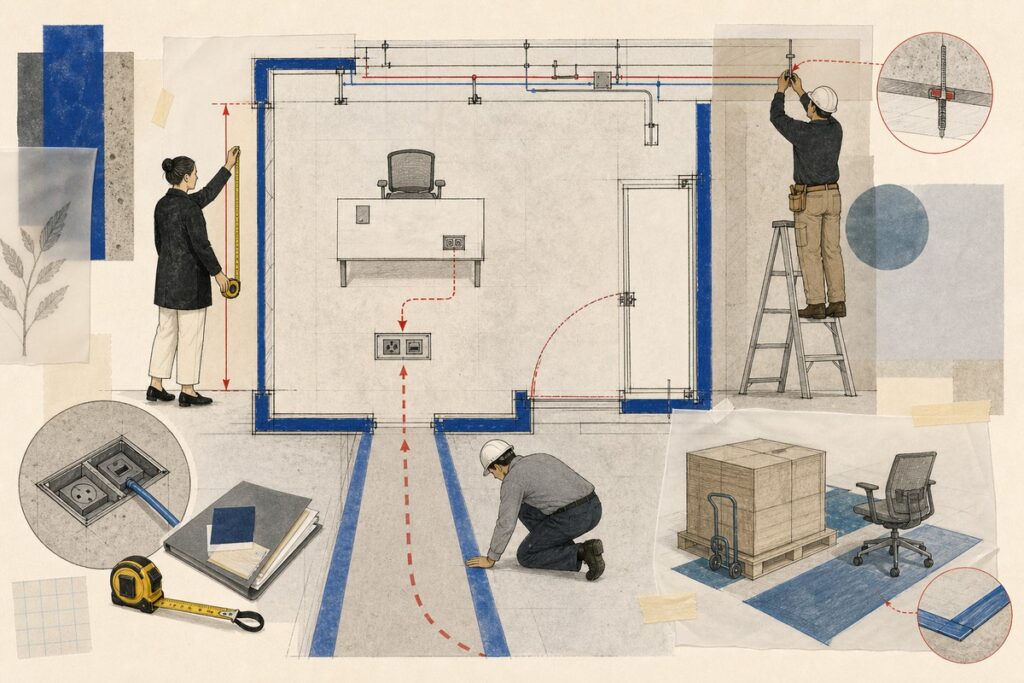
The local architect, engineer, code professional, contractor, or owner representative should confirm site measurements, building and fire requirements, electrical and data interfaces, accessibility, fixing methods, and installation conditions. Give the supplier the approved requirements that apply to the ordered item. Do not assume that a general product description proves compliance with a local requirement.
Assign Import, Receiving, and Installation Duties
The purchase order should name the importer, customs and tax responsibility, delivery point, unloading team, storage owner, assembly or installation party, damage-reporting process, and final acceptance owner. The same document should state who provides site access, lifting equipment, protection, and waste removal. These assignments keep a shipment handoff from becoming an unresolved site task.
How Should You Turn a Shortlist Into a Controlled Order?
Release an order only when the commercial, technical, and handoff records point to the same approved scope. A controlled sequence makes changes visible before they repeat across the package.

- Freeze the furniture schedule, drawings, finish references, quantities, and written exclusions.
- Compare quotations line by line against the same item codes, inclusions, delivery basis, and responsibilities.
- Record approved samples, mockups, and alternatives with the document revision that controls each decision.
- Add inspection points, correction rules, packing labels, shipment documents, and receiving records to the order.
- Confirm import, delivery, unloading, installation, and final acceptance owners before goods leave the agreed handoff point.
This approach also helps when office furniture is part of a wider FF&E package. The record sequence in hotel FF&E procurement illustrates a controlled approach to schedules, approvals, packing, and handover. The office order still needs its own drawings, local requirements, and acceptance criteria.
How Can a Buyer Start an Office Furniture Inquiry?
Start with a scope review rather than a request for a generic price list. A useful inquiry gives the supplier enough information to identify missing details and show which portions of the request are ready for quotation.
- Floor plans and furniture layouts
- A BOQ or item schedule with quantities and locations
- Current drawings, finish codes, and reference images
- Required standards, approvals, and local constraints
- Delivery location, target phase, and receiving plan
If the project includes several product categories, use the product category overview to separate the scope before combining furniture with other interior materials. The responsibility matrix should state which party manufactures, coordinates, approves, ships, receives, and installs each item.
For a broader project-materials entry point, visit OKBuild after the furniture scope is ready for review. Project-specific feasibility, performance, testing, and delivery terms still require confirmation.
Frequently Asked Questions
When Should a Buyer Request a Sample or Mockup?
Request a sample or mockup before bulk production when documents cannot settle a visible finish, touch point, assembly detail, interface, or repeated room standard. The approval record should name the item, revision, accepted features, outstanding comments, and the person who releases the item. Keep the approved reference available for later inspection.
How Should Product Certifications Be Checked?
Check the exact legal entity, product or model, standard, test conditions, issue date, and validity period before relying on a certificate or report. A marketplace badge, a general company statement, or an unrelated report does not prove that the ordered item satisfies a project requirement. The local code professional should confirm whether the document applies to the site and intended use.
Can One Supplier Coordinate Furniture and Other Fit-Out Materials?
One supplier may coordinate a mixed package when the contract defines the product boundaries, approvals, inspection responsibilities, packing plan, and shipment handoff. The buyer should still identify which items are manufactured, which are sourced, and who is responsible for each supplier interface. Coordination does not make every category one manufacturer or move local acceptance duties to the supplier.
Should Office Furniture Be Quoted Per Item or by Area?
Use item codes and quantities for a controlled purchase order, even when early planning begins with an area allowance. Per-item records allow the project team to compare dimensions, finishes, accessories, packing, and exclusions. Area pricing can support an early budget direction, but it should be replaced by an item schedule before a final order is released.