


Source Foshan building materials as a controlled project package, not as a catalog search. For windows, doors, cabinetry, finishes, and coordinated items, buyers need an approved scope, product-specific evidence, and named delivery responsibilities before comparing prices.
Start by tying each item to a drawing, schedule, or approved reference. Then resolve the interfaces between categories, record what the supplier is expected to provide, and leave location-specific design, code, installation, and import decisions with the right local parties.
What Belongs in a Foshan Building Materials Scope?
A Foshan building materials scope is usable when it separates openings, interior products, and coordinated categories, then states what controls each line. A supplier list or catalog can start product discovery, but it cannot make two project quotations comparable on its own.

| Scope group | Define before quotation | Keep under project confirmation |
|---|---|---|
| Windows and doors | Opening mark, location, operation, dimensions, frame or glass basis, finish, quantity, and required submission | Local code, exposure, design loads, installation interface, and acceptance criteria |
| Cabinets and fixed millwork | Room or unit, drawings, dimensions, visible finish, hardware, quantity, and approval reference | Substrate condition, site measurement, installation sequence, and final field fit |
| Tiles, sanitary ware, lighting, flooring, stone, and soft furnishings | Item code, use area, selected reference, quantity, target standard, sample need, packing unit, and delivery phase | Product-specific performance, local compliance, and compatibility with adjacent work |
Treat a one-stop building material supplier as a coordination route, not a substitute for a defined scope. The purchase documents should still state which line items are manufactured, sourced, inspected, packed, or excluded.
How Should You Define Windows and Doors Before Quoting?
Define windows and doors as opening systems with controlled records, not as generic product names. The quote needs enough information to connect each proposed system to its location, required function, approval path, and site interface.
Set the Opening Schedule
Give every opening a unique mark and show its elevation, room or grid location, quantity, dimensions, operation, glass or panel basis, finish, hardware, and adjacent construction. A fixed glass window specification guide shows why a drawing note that only names a window type leaves important decisions unresolved.

Verify the Proposed System
Request documents that identify the proposed system, configuration, test or calculation basis when required, deviations, and the responsible reviewer. Use window air leakage submittal guidance when the project needs to compare test evidence with the actual window mark, pressure condition, and assembly rather than a generic certificate.
How Should You Coordinate Other Project Materials?
Coordinate other project materials around their actual procurement role and physical interfaces. This keeps a broad building-material package from hiding which party owns the product decision, the approval record, or the connection between adjacent items.
Manufacturing and Sourcing Boundaries
Do not describe every item in a multi-category package as factory-made by one company. For example, the documented custom cabinet scope can be reviewed against drawings, finishes, hardware, and room requirements, while tiles, sanitary ware, flooring, lighting, stone, and soft furnishings may be coordinated or sourced for the approved project scope. Keep those roles visible in the quote.
Category Interfaces
Check interfaces before release: cabinet openings against appliance or sanitary locations, door swings against flooring transitions, stone cutouts against fixture information, and lighting locations against ceiling or millwork drawings. Where one choice changes another trade’s dimensions, finish, access, or installation sequence, assign the decision owner and issue one current revision to every affected supplier.

What Should You Confirm Before Releasing an Order?
Release an order only after the selected product, approval record, inspection plan, packing logic, and receiving plan point to the same controlled scope. A low unit price cannot resolve a missing drawing, unapproved finish, or unclear delivery responsibility.
Approve the Controlled Records
Use the current drawing revision, item schedule, sample or finish reference, approved deviation list, and quote as one record set. A sample confirms only what it actually represents. A shop drawing must also show the coordinated sizes, locations, interfaces, and revision status needed for fabrication or purchasing.
Plan Inspection, Packing, and Receiving
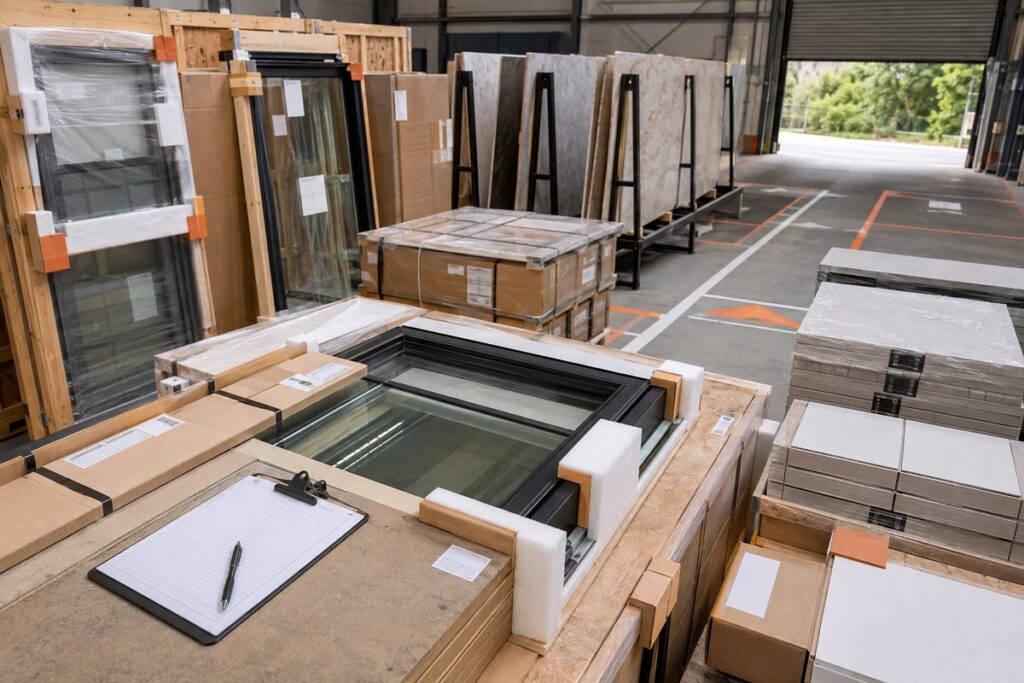
Set inspection points, labels, protective packing, loading sequence, damage-reporting steps, and the party authorized to release each shipment. For hospitality packages, the hotel material-sourcing guide gives a related buyer path for keeping BOQs, approvals, inspection records, packing labels, and shipment files connected.
What Stays With the Local Project Team?
The local project team should retain responsibility for site measurement, adopted codes, permits, structural and building-envelope decisions, electrical and fire requirements, accessibility, installation, and final acceptance. The architect, engineer, contractor, importer, and authority with jurisdiction should confirm their own requirements before a supplier quote becomes a release document.
| Decision | Responsible project party |
|---|---|
| Local code and permit requirements | Local architect, engineer, code professional, and authority with jurisdiction |
| Existing opening and substrate conditions | Contractor or assigned field-measurement party |
| Import entry, duties, destination handling, and site unloading | Named importer and logistics or site-receiving party |
| Installation and final acceptance | Contractor and the party named in the contract |
How Can You Start a Foshan Materials Inquiry?
Start with a BOQ or category list, current drawings, quantities, finish references, required standards, destination, target delivery phase, and the people who can approve changes. The product-category directory can help organize the material scope before a buyer requests a coordinated quotation.
For a project-supply discussion, the OKBuild project-materials overview is the broad entry point. Any manufacturing, sourcing, sample, inspection, packing, and delivery role still needs confirmation against the approved project scope and contract.
Frequently Asked Questions
Can a Foshan Building Materials Price List Set a Project Budget?
A Foshan building materials price list can provide an early comparison point, but it cannot set a reliable project budget without a defined product, quantity, finish, technical requirement, packing basis, delivery term, and destination. Use it to identify categories for further review, then request a scope-based quotation with stated inclusions and exclusions.
Can a Test Report for One Window Apply to Another Size?
Not automatically. The reviewer should compare the proposed window with the tested specimen, including the system, configuration, dimensions, glass, hardware, reinforcement, pressure, test method, and stated limits. A report for a different series or configuration needs project-specific review before it is treated as evidence for the proposed opening.
What Is the Difference Between a Sample and a Shop Drawing?
A sample is a physical or visual reference for an approved material, finish, color, hardware item, or assembly detail. A shop drawing coordinates how the selected item fits the project, including marks, dimensions, interfaces, and revisions. Use both when appearance and fabrication or installation details need separate approvals.
Can Project Materials Be Packed by Room or Delivery Phase?
They can be, provided the approved scope defines the room, unit, floor, area, or phase identifiers before packing starts. The purchase documents should state the label format, packing list, handling needs, receiving party, and the procedure for shortages or damage so site teams can reconcile delivered goods against the controlled order.