


Contract furniture is a controlled procurement package for a commercial project. It may be made for the project, selected from a standard range, or adapted from a catalog item, but the buyer releases it against approved drawings, specifications, quantities, and a delivery plan.
The practical starting point is a furniture schedule tied to plans, finish references, room quantities, and delivery phases. That record gives bidders one basis for pricing and gives the receiving team a way to check what arrives.
How Does Contract Furniture Fit Into a Commercial Project?
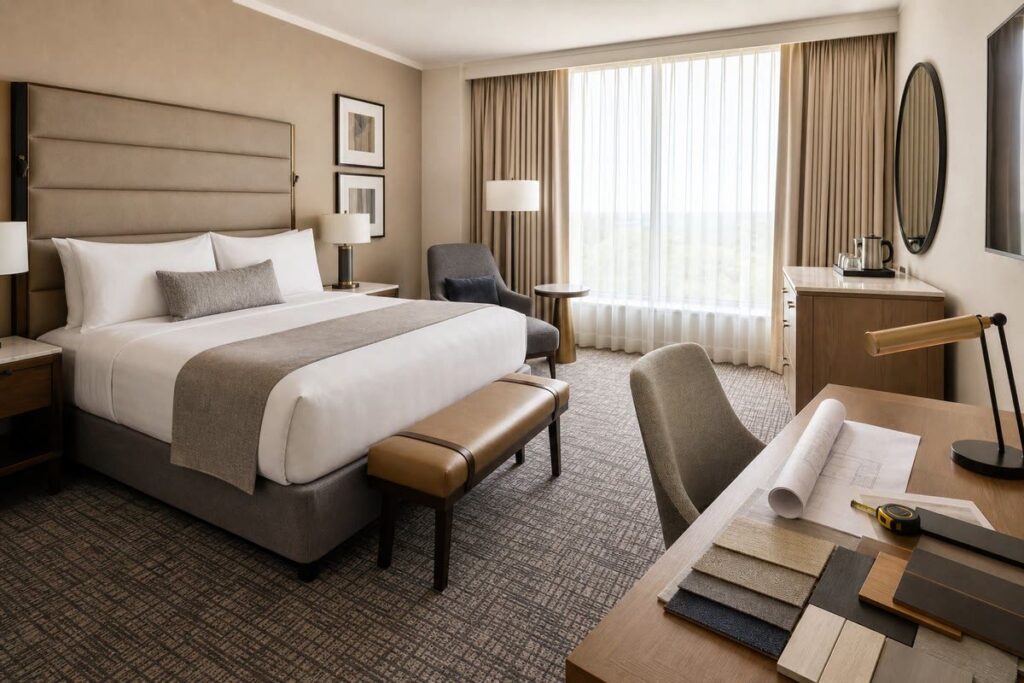
Treat contract furniture as one project package, not as a group of unrelated purchases. It must align with room layouts, adjacent trades, site access, and the sequence in which the site needs each item. The commercial project furniture category can help a buyer separate loose furniture, fixed furniture, and room packages before a quotation begins.
Commercial Use Conditions
Start with the room and the way people will use it. A hotel guestroom desk, restaurant banquette, office task chair, and lobby lounge chair face different traffic, cleaning, access, maintenance, and replacement conditions. State the space, user group, cleaning method, expected use, and local requirements before asking for a proposal. If the project requires a test, certification, load rating, or material restriction, identify the standard, product configuration, and evidence needed for acceptance. Local code professionals and authorities should confirm the requirements that apply at the destination.
Retail Furniture Limits
Retail furniture can suit a low-risk commercial area, but a retail listing may not provide enough information for a project comparison. It may omit construction details, finish consistency, upholstery source, replacement availability, packaging method, or revision control. The useful question is whether the supplier can provide the approved information, quantities, and delivery controls the project needs. A lower initial price can create a coordination problem when dimensions change, finishes vary, or damaged items need replacement.
FF&E and Millwork Boundaries
Furniture, fixtures, and equipment, usually shortened to FF&E, is a package label. It does not decide which party owns each item. Loose beds, tables, seating, desks, and lamps may sit in the FF&E package. Built-in wardrobes, reception counters, wall panels, and attached work may sit in millwork or another trade package.
A hotel uses the same boundary when it defines a hotel FF&E procurement scope. The bill of quantities, or BOQ, sets out quantities and allowances. Drawings set out location, dimensions, and trade interfaces. Use both before release because furniture can affect power locations, wall backing, floor finishes, door clearances, and access routes.
What Belongs in a Contract Furniture Specification?
A contract furniture specification must let the team identify, price, approve, inspect, and receive the same item. A finish image or a short product description cannot control a commercial purchase by itself.
Furniture Schedule
The furniture schedule connects design decisions to procurement. Each line should identify the item, room or area, quantity, dimensions, drawing reference, product description, finish, upholstery or hardware, and delivery phase. Use one dated revision for pricing, then log later changes against the affected item. When a hotel repeats the same room type, the hotel material BOQ should show the room type and whether the quantity includes spares.
Performance Requirements
Write only requirements the project can verify. Depending on the item and location, those requirements may cover durability, cleanability, moisture exposure, upholstery behavior, electrical components, accessibility, or maintenance access. A requirement needs an applicable standard, test method, acceptance level, product configuration, and evidence required for approval. A general statement that an item is “commercial grade” does not prove that it meets a project-specific requirement.
Construction References
Use drawings and written callouts to identify construction that will disappear from view. Reference the substrate, frame, edge treatment, hardware, upholstery build, fastening method, drawer slides, leveling components, and wall-fixing approach when those details affect fit, durability, or maintenance.
When a room package includes built-in cabinets, cabinet core and finish references should identify the substrate, edge treatment, hardware, and fixing method. A render can confirm the visual direction, but it does not by itself verify concealed materials or final dimensions. If the project needs proof before the full batch begins, request a first article, which is a finished production item made to the approved design.
Finish References
Use a finish reference that a supplier can repeat across the order. A written color name is usually too broad for timber grain, metal plating, stone veining, textured laminate, paint sheen, or upholstery. Tie the finish to a physical sample, finish card, approved control sample, or signed digital reference. Record the item ID, sample date, revision, and approver. Natural materials and made-to-order finishes can vary, so the approval record should state the acceptable range.
Sample Approval

Sample approval is the decision point between quotation and production. The approval record should name the sample, related schedule item, drawing revision, comments, decision owner, and final status. A sample may confirm upholstery, finish, edge detail, hardware, dimensions, or complete construction. If the result is “approved as noted,” issue written instructions that state which notes change production. Keep one approval authority and one current record.
Which Proposal Differences Matter When Comparing Contract Furniture?
Prices become comparable only after the scope aligns. Start with the schedule item, then identify what each supplier includes, excludes, assumes, and assigns to another party.
Scope Alignment
Compare each proposal line by line against the furniture schedule. Confirm dimensions, materials, finish level, hardware, upholstery, accessories, packaging, labels, quantity basis, and delivery scope. Ask bidders to mark exclusions and open assumptions instead of filling gaps with guesses.
When furniture shares a room with cabinetry, lighting, or soft furnishing, show each scope in the same commercial product category plan. A proposal can look complete while omitting shop drawings, samples, inspection, crating, spare parts, installation components, or delivery support. Record the omission beside the affected item before comparing the total.
Responsibility Allocation
Give every handoff a named owner because an unassigned task can delay a release or leave a site issue unresolved.
- Field dimensions and site access
- Sample approval and design comments
- Manufacturing and production changes
- Inspection and corrective actions
- Export documents and freight booking
- Import clearance, taxes, unloading, and storage
- Site installation and damage claims
A furniture quote does not automatically include local code review, engineering, installation, customs clearance, destination charges, or site unloading. The OKBuild project material system groups furniture with related categories, but the purchase order still needs to assign each handoff.
Alternative Proposals
Keep an alternative proposal separate from the base proposal. An alternative may solve a budget, availability, maintenance, or delivery concern, but it needs a clear comparison record. Ask the bidder to state the change in construction, dimensions, appearance, performance evidence, lead time, warranty terms, and price. A substitute that looks similar in an image may change cleaning methods, repair options, installation needs, or future replacement planning.
Price Comparison
Normalize commercial terms before choosing a supplier because unit price alone does not show whether the proposals cover the same work.

| Comparison point | Align before choosing |
|---|---|
| Scope | Item, quantity, material, finish, accessories, and exclusions |
| Commercial terms | Currency, tax treatment, payment terms, and delivery terms |
| Project additions | Samples, testing, inspection, packing, labels, and freight |
| Site support | Unloading, storage, installation, and damage handling |
Separate the base item price from project-specific additions. This makes the buyer’s budget decision easier to defend and keeps later changes from reopening the full furniture package.
How Does Contract Furniture Move From Approval to Site Delivery?
Move contract furniture through a controlled information trail. The approved item, production instructions, inspection record, packing list, and receiving record should use the same item identification.
Controlled Production Release
Release production from a final package, not an early quotation or an outdated sample. The package should identify the approved schedule, drawings, finishes, quantities, technical comments, inspection criteria, packing needs, and delivery labels.
Resolve open dimensions, substitutions, approval comments, and trade interfaces before release. If a change occurs after release, issue it in writing and link it to the affected item IDs. This gives the buyer and supplier one current instruction set.
Inspection Evidence
Inspection evidence should show what was checked against the agreed acceptance criteria. Depending on the project scope, the record may cover item ID, quantity, dimensions, finish, function, visible defects, packaging, photographs, corrective actions, and release status. If the buyer needs independent inspection, third-party testing, or a formal sampling method, agree on it before production begins. The inspection plan should state how the team will handle a nonconforming item.
Packing Plans
Plan packing around how the site will receive, store, and open the goods. Account for fragility, shipment method, lifting access, storage limits, room or floor sequence, package labels, and receiving documents. A glass tabletop, an upholstered headboard, and a flat-packed cabinet component need different protection.
The packing list should use the same room, unit, floor, or item code logic as the labels. That match lets the site team identify each package before opening it. Import, unloading, and local storage remain separate responsibilities unless the contract assigns them to the supplier.
Site Receiving
Record the condition and location of goods when they arrive. The receiving team needs the packing list, label key, delivery sequence, storage plan, and a method for recording shortages or visible damage before packaging is discarded.
Set the exception process before delivery. Identify who photographs damage, checks quantities, quarantines affected items, and communicates with the supplier or carrier. A complete record gives the parties evidence to resolve a claim while the shipment details remain available.

Frequently Asked Questions
Is Contract Furniture Always Made to Order?
No. Contract furniture can be made for the project, selected from a standard range, or adapted from an existing design. The deciding factor is whether the item can meet the approved project scope and be supplied under the required controls. A standard item still needs confirmation of dimensions, finish availability, quantity, lead time, packing, and project requirements. A made-to-order item needs a clear release package because the project defines more of its final details.
Is There a Minimum Order Quantity for Contract Furniture?
Suppliers set their own minimum order quantities, so buyers should not assume a single industry-wide threshold. The practical threshold depends on the product, customization level, material availability, production method, sample needs, and whether the order repeats across rooms or units. Ask for the minimum by item, finish, fabric, and order phase because a supplier may quote a small quantity under different pricing or material purchasing conditions.
When Does Contract Furniture Lead Time Begin?
Treat lead time as starting when the supplier accepts a complete production release under the agreed contract. Open drawings, incomplete finishes, sample comments, quantity changes, unresolved payment terms, or shipping issues can delay that release. An early estimate can support planning, but it remains an estimate until the item, quantity, approval status, and delivery terms are defined.
What Does a Commercial-Use Warranty Cover?
A commercial-use warranty covers the product, use conditions, and remedies identified in its written terms. Review the coverage period, defect definition, exclusions, maintenance conditions, claim process, repair or replacement responsibility, and any limits on labor, freight, or site work. The buyer should also confirm whether the selected upholstery, finish, hardware, and installation method fall within the warranty scope. A warranty does not replace the project’s performance or code review.
Can Buyers Supply Their Own Upholstery Fabric?
Yes, if the supplier accepts the fabric and the parties control the handoff. Confirm usable width, pattern direction, repeat, backing, shrinkage, required performance documentation, delivery date, and responsibility for defects or short supply. Approve a trial or control sample before bulk upholstery begins. The contract should state who carries the risk if the fabric arrives late, differs from the approved sample, or cannot be used with the intended construction.