


Office lighting design for fit-out procurement turns the approved office layout into a package that can be priced, coordinated, and released without leaving fixture locations or control requirements to guesswork. The package should identify what is being supplied, what remains open, and who approves each decision.
The buyer’s task is to issue a usable record, coordinate it with the ceiling and workplace plan, and keep local design, electrical, and code decisions with the responsible project professionals. This guide covers that procurement handoff rather than local lighting engineering.
What Does Office Lighting Design Cover During Fit-Out Procurement?
For procurement, office lighting design connects the intended use of each area to a defined fixture, mounting, control, quantity, and approval scope. It gives a bidder enough information to price the same package, but it does not transfer local design or compliance responsibility to a supplier.
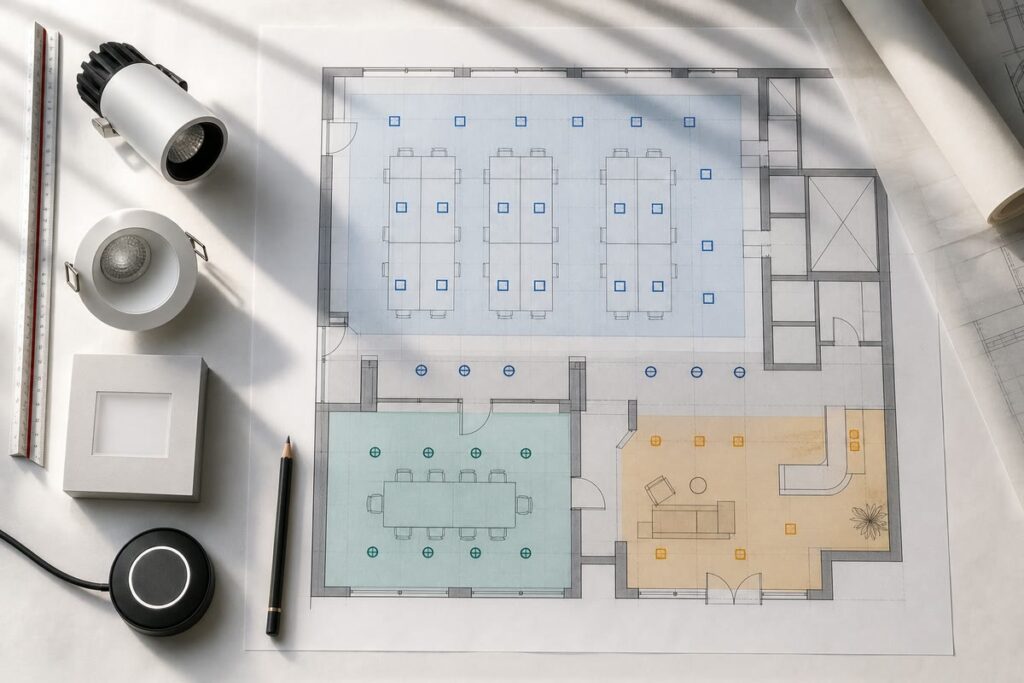
Start with the approved room use and layout. Open work areas, meeting rooms, reception points, and circulation areas can need different fixture locations or controls because their tasks and interfaces differ. The project lighting category can support category selection, while the issued package states whether it includes luminaires only or related drivers, sensors, mounting accessories, emergency options, spare items, or other project-specific components. Show any ceiling, electrical, or layout dependency as an open item rather than a final selection.
What Needs to Be Issued Before a Lighting RFQ?
A lighting RFQ needs one controlled set of records that links each fixture tag to its location, physical condition, electrical information, quantity, and approval status. A product image or a broad fixture description is not a sufficient basis for a like-for-like quotation.
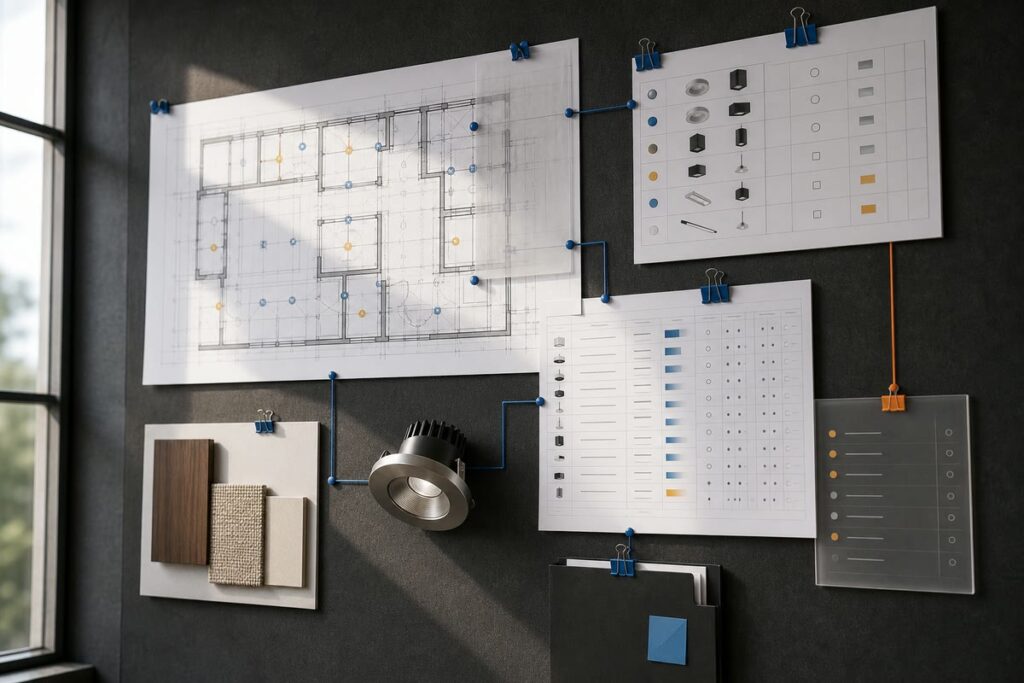
| Issued record | Procurement decision it supports |
|---|---|
| Current floor plan and reflected ceiling plan | Matches fixture tags to locations, ceiling types, heights, and mounting conditions |
| Lighting schedule and legend | Identifies the fixture reference, finish, electrical details, control requirement, and quantity basis |
| BOQ or quantity register | Separates the order quantity from a drawing count that may change |
| Approved sample, submittal, or finish reference | Establishes the reference against which a proposed item or substitution is reviewed |
| Open-item register | Names any pending ceiling, electrical, control, or approval decision before order release |
The schedule should use unique fixture tags that match the drawings. It should also record the mounting method, visible finish, voltage and frequency stated for the project, driver or dimming requirement, control interface, and any accessory that changes what is supplied. The responsible project team should confirm the electrical compatibility and local requirements before release.
Where color rendering is part of the selection, keep the requirement tied to the approved reference and sample review. A CRI specification is one input to fixture selection; it does not by itself prove brightness, efficiency, certification, or overall lighting performance.
Which Office Interfaces Can Change the Lighting Package?
The lighting package should be checked against the latest office fit-out information before it is released, because a change to the ceiling, services, furniture, glazing, or controls can change the supplied item or its installation interface. A fixed-window specification may be relevant when glazing affects the daylight information being reviewed. Coordination identifies dependencies. It does not replace local design or construction review.
Ceiling and Service Integration

The reflected ceiling plan, or RCP, should match the lighting schedule on fixture tags, ceiling type, height, bulkheads, grids, and transitions. Review fixture locations against HVAC devices, sprinklers, detectors, speakers, access panels, structure, support requirements, and electrical routes. Hold a ceiling-integrated fixture when its mounting condition or required access remains unconfirmed.
Work Settings and Daylight
Review lighting locations with the final workstation and monitor orientation, meeting-table position, partitions, millwork, glazing, daylight controls, and reflective surfaces near visual tasks. The issued contract-furniture layout can change these interfaces. Mark affected fixture locations as pending until the related layout or glazing decision is confirmed.
How Should Buyers Review a Quote or Fixture Substitution?
Compare every quotation against the issued fixture tags and records, not against a broad description or a single total. A lower price may reflect a different mounting condition, control option, accessory, approval reference, lead-time assumption, shipping basis, or drawing revision.
Ask each bidder to identify inclusions, exclusions, alternates, and assumptions against the same schedule. The buyer can then decide whether an exception is acceptable, requires a document revision, or needs a like-for-like price. This creates a clarification record before selection rather than a dispute after release.
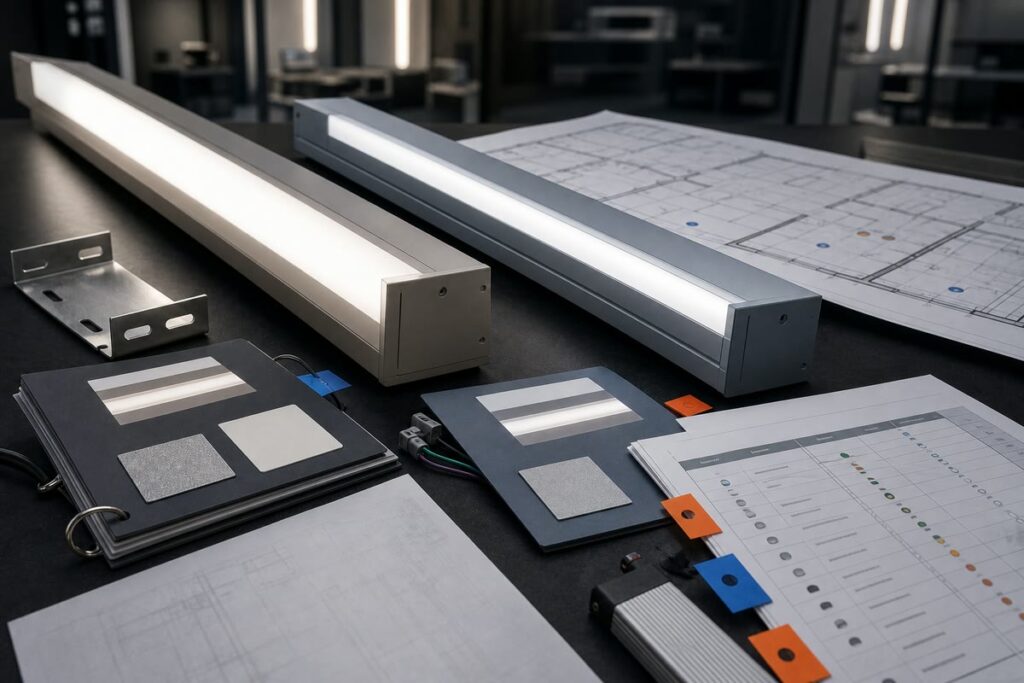
Review a proposed substitution against the issued tag, mounting condition, finish, electrical and control fields, approved reference, and any project-specific evidence required by the designated reviewer. Do not release the substitution until that reviewer records acceptance. A supplier quotation can state its own scope, but it cannot settle a design, code, or site decision that belongs to another party.
Who Owns Each Lighting Decision?
The project team should name the owner of every decision before the lighting package is released. Local professional duties depend on the jurisdiction, building conditions, and approved documents. Supply coordination is limited to the confirmed commercial scope.
| Decision area | Responsible party and boundary |
|---|---|
| Lighting design, calculations, and code interpretation | The responsible local designer, engineer, or other qualified project professional |
| Electrical design, installation, testing, commissioning, and final acceptance | The responsible local electrical and construction team under the project requirements |
| Fixture scope, quotation planning, samples, packing, and delivery coordination | The supplier or coordinator only where the approved project scope and contract assign that work |
Lighting is a sourced or coordinated category for OKBuild, not a documented core manufacturing category. OKBuild’s published workflow describes review of drawings, BOQs, finish schedules, samples, approved files, packing, and delivery planning. The final technical feasibility, inspection plan, contract scope, and delivery responsibilities still require project confirmation.
How Should a Buyer Submit a Lighting Package for Review?
Submit the current floor plan and RCP, lighting schedule, fixture references, control requirements, BOQ or quantity basis, approval status, destination, delivery phase, and named owners for design, electrical coordination, installation, and acceptance. That record allows the supply scope and missing information to be reviewed before a project-specific quotation or sample path is discussed.
For a wider office package, review the relevant product categories and interfaces together before the final scope is set.
OKBuild can review the supplied project records for quotation, sample, packing, and delivery coordination within a confirmed scope. Start the project review with OKBuild.
Frequently Asked Questions
Can a Lighting Schedule Be Used Before the Final Fixture Is Chosen?
Yes, if the schedule clearly marks the item as pending and identifies the information needed to select it. Keep the tag, location, mounting condition, quantity basis, approval owner, and open decision visible so bidders do not treat a preliminary reference as a released fixture.
What Does the RCP Need to Confirm for Recessed Lighting?
The RCP should identify the current ceiling type, height, grid or bulkhead condition, fixture tag, and nearby services or access requirements that affect the mounting location. The responsible project team should also confirm the related electrical and installation details before release.
What Should a Supplier Clarify Instead of Assuming?
A supplier should identify missing quantities, mounting conditions, control interfaces, electrical information, approval references, delivery assumptions, and other scope differences that change the quotation. The buyer should then assign a decision owner or revise the issued record.